
Some people have always been at greater risk from infection, and UK policy has treated them in very different ways over the decades, from ’flu vaccination programmes in the 1960s to shielding in 2020 and narrowing vaccine eligibility today. This timeline sets out, in order and with sources, how clinical vulnerability has been defined, protected and sometimes overlooked.
Chapter One
Before Covid-19: protecting 'at risk' groups
- December 1952
The Great Smog of London
Coal smoke trapped by cold, still weather covered London for five days. About 4,000 people died at the time, and later estimates put the toll at 10,000 to 12,000, mostly from breathing and lung illness. It led to the Clean Air Act 1956.[57][58]
- Late 1960s
Annual ’flu vaccination recommended for clinical risk groups
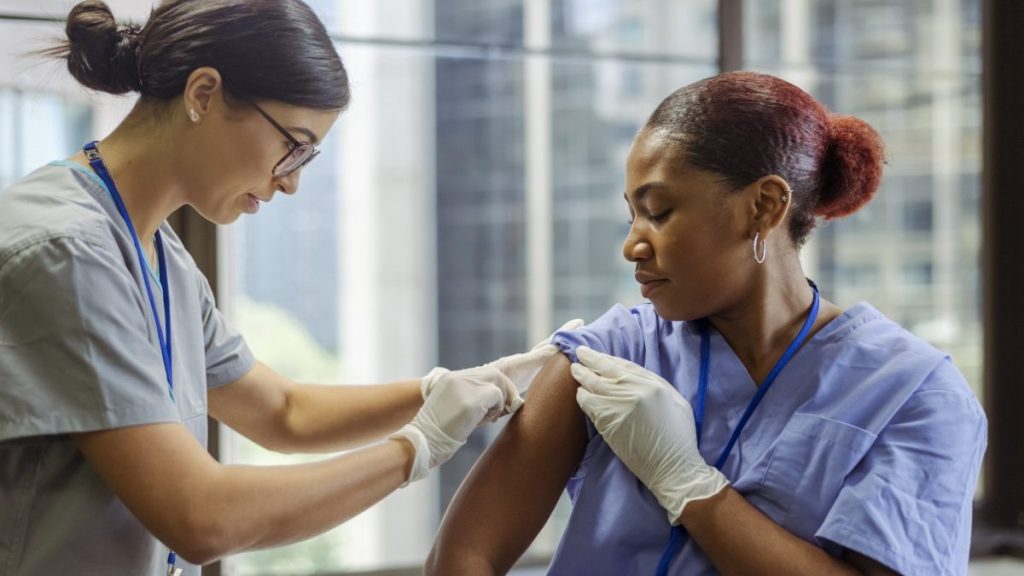
Influenza immunisation has been recommended in the UK since the late 1960s, initially for people in clinical risk groups at higher risk of serious illness and death.[1][2]
- 2000
’Flu vaccination extended to everyone aged 65 and over
Policy was widened beyond clinical risk groups to include all people aged 65 or over.[1]
- 2004
First Heatwave Plan for England
Published after the August 2003 heatwave, which caused more than 2,000 excess deaths in the UK over ten days, the plan set out how the NHS, councils and other services should protect people during severe heat.[59]
- April to June 2009
H1N1 ('swine ’flu') pandemic reaches the UK
The first UK cases were confirmed on 27th April 2009 and the World Health Organization declared a full pandemic (Phase 6) on 11th June 2009.[3]
- 2009
Risk groups prioritised for pandemic vaccine
Vaccine priority went to pregnant women, front-line health and social care workers, and people aged over six months with chronic conditions that put them at higher risk of severe illness or death from influenza.[3]
- July 2010
Independent review of the 2009 pandemic response
Dame Deirdre Hine's review concluded that the UK response had been proportionate and effective, while noting that the H1N1 strain proved milder than the pandemic planners had anticipated.[3]
- 2013
Children added to the ’flu programme
Following JCVI advice in 2012, a phased extension of the ’flu programme to children aged two to under seventeen began in 2013.[1]
- January 2017
Energy Priority Services Register widened
Ofgem widened the register to any energy customer in a vulnerable situation, including temporary ones. People who rely on medical equipment that needs electricity can register for advance warning of planned power cuts and help in an emergency.[60]
Chapter Two
2020: shielding
- 2020
Clinically Vulnerable Families is founded
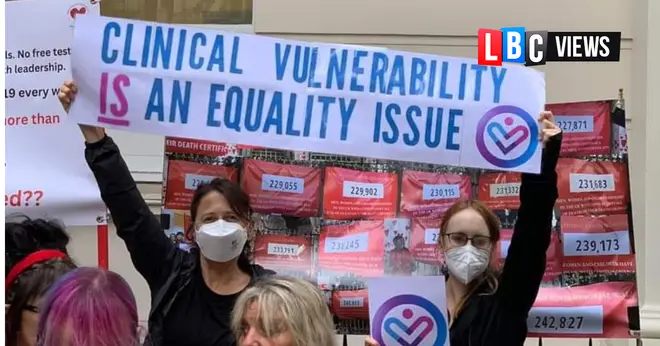
CVF describes itself as a community founded in 2020, providing information and support for people who are Clinically Vulnerable to Covid-19, and it began as a Facebook group. It is now a community interest company.[4][5]
- March 2020
Two risk categories defined: Clinically Vulnerable and Clinically Extremely Vulnerable
Early Covid-19 guidance set out a 'Clinically Vulnerable' group, which included everyone aged 70 or over, pregnant women and people with a range of chronic conditions, and a smaller 'Clinically Extremely Vulnerable' group advised to shield.[6][7]
- 20th March 2020
First NHS Shielded Patient List produced
The first list of people at highest clinical risk was assembled from existing NHS data, then updated as GPs and hospital clinicians added patients.[8]
- 23rd March 2020
Shielding letters and texts begin; national support service goes live
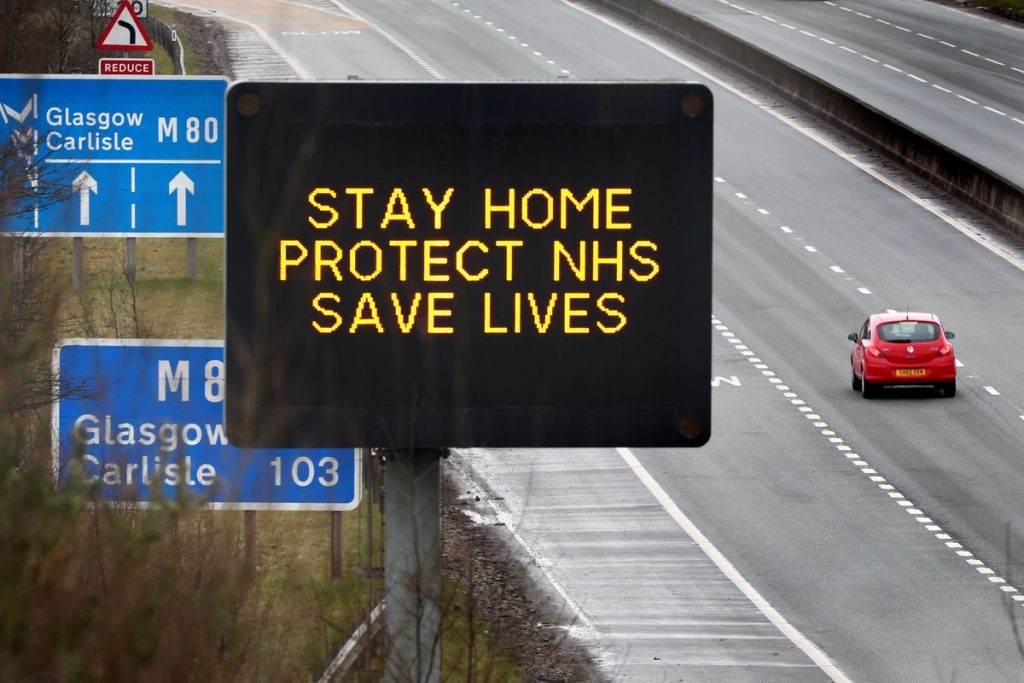
Notifications to people identified as Clinically Extremely Vulnerable began on 23rd March 2020, the day the UK entered lockdown, and the public-facing Clinically Extremely Vulnerable People Service went live. NHS guidance defined shielding as staying at home and avoiding all face-to-face contact for at least 12 weeks.[9][8][10]
- April to May 2020
The Shielded Patient List grows to 2.2 million
The list rose from about 900,000 within two days to 1.3 million by 12th April, 1.8 million by 18th April and 2.2 million by 7th May 2020.[9]
- 15th June 2020
Face coverings become compulsory on public transport
Face coverings became a legal requirement for passengers on public transport in England, enforced by the police and transport operators, with a fixed penalty for refusing.[11]
- 22nd June 2020
Phased relaxation of shielding announced
A letter from the Chief Medical Officer for England and NHS England's Medical Director set out an easing of shielding from 6th July and again from 1st August 2020.[12]
- 24th July 2020
Face coverings required in shops and other indoor places
The requirement was extended to shops, enclosed shopping centres, banks, post offices and transport hubs, and later to more venues. From 24th September 2020 the fixed penalty rose to £200 for a first offence, doubling on repeats.[13][14]
- 1st August 2020
Shielding paused in England
The national shielding programme paused. Free food parcels, medicine deliveries and Statutory Sick Pay eligibility linked to shielding ended, and people were told they could return to COVID-secure workplaces.[15][8]
- Autumn 2020
Clinically Extremely Vulnerable group extended; guidance tied to local restrictions
New guidance issued on 13th October linked advice to local alert levels, and further guidance followed ahead of the November lockdown. NHS England also asked trusts to add adults with stage 5 chronic kidney disease and adults with Down's syndrome to the Shielded Patient List, using an Oxford risk model.[16][17]
- December 2020
Health Foundation analysis of the shielded population
Analysis found over two million people had been identified as Clinically Extremely Vulnerable, that a third of those shielding reported reduced care for existing conditions, and that 37 per cent reported a decline in mental health and wellbeing.[18]
- 16th December 2020
Air pollution recorded as a cause of death
An inquest found that air pollution made a material contribution to the death of nine-year-old Ella Adoo-Kissi-Debrah, who had severe asthma and lived near the South Circular road in London. It was the first time in the UK that air pollution was listed as a cause of death.[61]
- 22nd December 2020
Parliamentary committee criticises siloed support
The Women and Equalities Committee found that support for the Clinically Extremely Vulnerable relied on medical criteria alone.[19]
- 30th December 2020
JCVI sets priority groups for Covid-19 vaccination
The JCVI placed Clinically Extremely Vulnerable people under 70 in priority group 4, alongside those aged 70 to 74. Adults aged 16 to 64 with underlying health conditions that raise the risk of serious disease, the group that included Clinically Vulnerable adults under 65, were placed in group 6, after groups 1 to 5, which included everyone aged 65 and over.[20]
Chapter Three
2021: a second lockdown, a new risk model, and the end of shielding
- 5 and 6th January 2021
Shielding advice reissued for the third national lockdown
Following the announcement of a further lockdown for England on 5th January, guidance advising Clinically Extremely Vulnerable people to shield was reissued on 6th January 2021.[21]
- 13th January 2021
Vaccines delivery plan sets the first target
The government's delivery plan made its top priority offering a first dose to everyone in groups 1 to 4 by 15th February, and said it would likely take until spring to work through all nine groups.[22]
- From 15th February 2021
Vaccination of priority group 6 begins
GPs began vaccinating group 6 from the week of 15th February, the date by which everyone in the first four groups was due to have been offered a first dose. Group 6 covered adults under 65 with conditions including chronic respiratory, heart, kidney and liver disease, diabetes, neurological conditions, cancer and weakened immunity, and some adult carers.[23][24]
- 16th February 2021
QCovid risk assessment adds people to the shielding list
The government announced that a risk model developed by the University of Oxford would identify further adults at high risk; the government said up to 1.7 million people were identified, and the ONS reported an additional 1.5 million in England, taking the England total to 3.8 million.[25][21]
- 1st April 2021
Advice to shield paused
From 1st April 2021 the advice to shield was paused in England.[26]
- 12th May 2021
Public inquiry into the pandemic announced
Prime Minister Boris Johnson announced an independent public inquiry into the UK's response to the pandemic.[27]
- 17th May and 19th July 2021
Face coverings removed from schools, then from the law
From 17th May 2021 pupils and staff were no longer advised to wear face coverings in classrooms. On 19th July 2021 the legal requirement to wear them in England ended, with no replacement duty on businesses or transport operators.[28][13]
- 1st September 2021
JCVI advises a third primary dose for people who are severely immunosuppressed
The JCVI advised a third primary vaccine dose for people over 12 who were severely immunosuppressed at the time of their first two doses, noting that around 40 per cent showed low antibody levels after two doses.[29]
- 15th September 2021
Shielding programme ends
The shielding programme ended in England. A letter dated 17th September 2021 told people they would not be advised to shield in future and that no specific national guidance would be provided for them.[26][30]
- 1st October 2021
UK Health Security Agency launches
UKHSA formed from Public Health England, NHS Test and Trace and the Joint Biosecurity Centre, and took over health protection responsibilities including guidance on respiratory infections.[31]
- December 2021
Face coverings return under Plan B
The government reintroduced a legal requirement to wear face coverings in shops and on public transport in England in response to the Omicron variant.[32]
- December 2021
Baroness Hallett appointed to chair the Inquiry
Retired judge Baroness Heather Hallett was appointed chair of the Covid-19 Inquiry.[27]
- 16th December 2021
Treatments for people at highest risk become available in the community
Under an interim commissioning policy announced on 8th December, neutralising monoclonal antibodies and antivirals became available from 16th December 2021 to people at greatest risk, including people who are immunocompromised, have cancer or have Down's syndrome.[33]
Chapter Four
2022 to 2023: 'living with Covid' and the prophylaxis question
- 27th January 2022
Plan B ends and the legal requirement to wear face coverings lapses
The 2021 regulations expired. There has been no legal requirement to wear a face covering anywhere in England since.[32]
- 21st February 2022
'Living with Covid-19' plan published
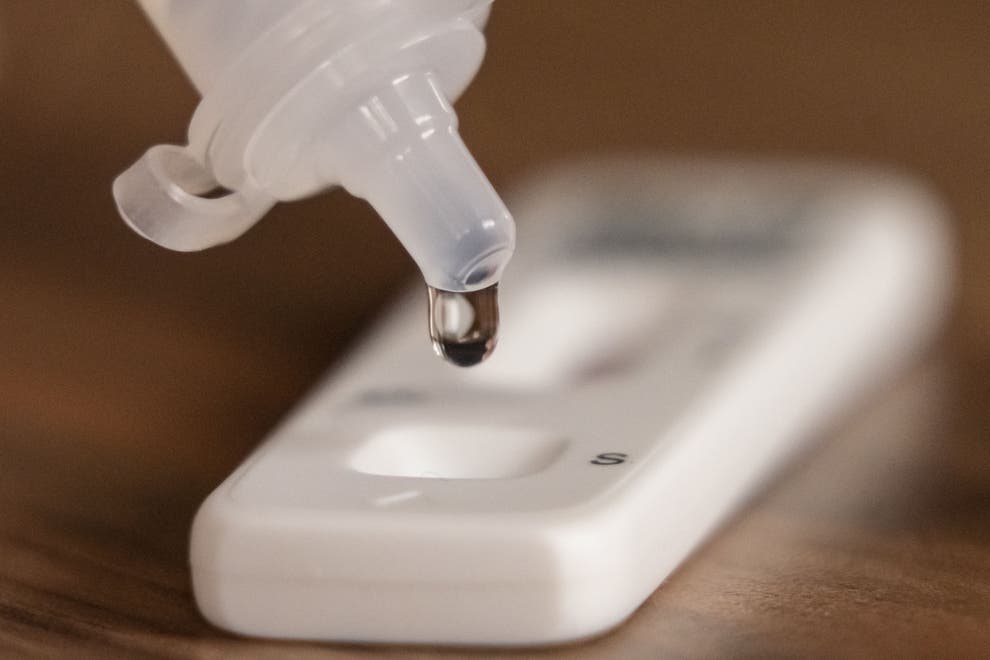
The plan set out the end of legal self-isolation requirements from 24th February and of universal free testing from 1st April 2022, while stating that protection for the most vulnerable would continue through vaccination and targeted testing, with limited symptomatic testing for at-risk groups.[34]
- 17th March 2022
Evusheld authorised by the MHRA
The UK medicines regulator authorised tixagevimab plus cilgavimab (Evusheld) as pre-exposure prophylaxis against Covid-19.[35]
- 30th May and 24th August 2022
RAPID C-19 group advises against patient access to Evusheld
The group advised the Chief Medical Officer that there was no certainty the treatment would prevent symptomatic illness caused by Omicron variants in the vulnerable population, and on 24th August maintained that recommendation.[35]
- 1st June 2022
Universal masking in healthcare settings stepped down
NHS England and UKHSA ended the routine requirement for staff, patients and visitors without symptoms to wear masks in health and care settings in England, keeping them for Covid and respiratory pathways, outbreaks and symptomatic patients.[36]
- 28th June 2022
UK Covid-19 Inquiry formally begins
The Inquiry formally began with the publication of its terms of reference.[27]
- 2nd March 2023
CVF asks for interim Inquiry reports
At a preliminary hearing for Module 3 (healthcare), CVF asked for interim reports to be published rather than waiting for a single final report, because of the ongoing risks to Clinically Vulnerable people. The Inquiry agreed, and has since published its findings module by module.[37]
- 5th May 2023
NICE final draft guidance does not recommend Evusheld
NICE published final draft guidance on tixagevimab plus cilgavimab for preventing Covid-19. Its published recommendation is that the treatment is not recommended for adults unlikely to respond adequately to vaccination, or for whom vaccination is contraindicated.[38][39]
- 1st September 2023
Shingles vaccine for severely immunosuppressed adults
The NHS began offering the Shingrix vaccine to severely immunosuppressed people aged 50 and over, with no upper age limit, and made them the first priority for the programme.[62]
Chapter Five
2024 to 2025: Inquiry reports begin and vaccine eligibility narrows
- 18th July 2024
Module 1 report published; CVF responds
The Inquiry's first report, on resilience and preparedness, was published on 18th July 2024. CVF said it had missed issues faced by Clinically Vulnerable families, including tailored guidance, PPE for home use and mental health support.[40][41]
- 2nd August 2024
JCVI advice for autumn 2024
Eligibility was set as people aged 65 and over, care home residents for older adults, and people aged six months to 64 in a clinical risk group.[42]
- 2024
CVF publishes its first Voting Accessibility Audit
CVF's audit examined how the Electoral Commission's guidance was being implemented for Clinically Vulnerable voters. A follow-up audit was published in 2026.[43]
- 14th November 2024
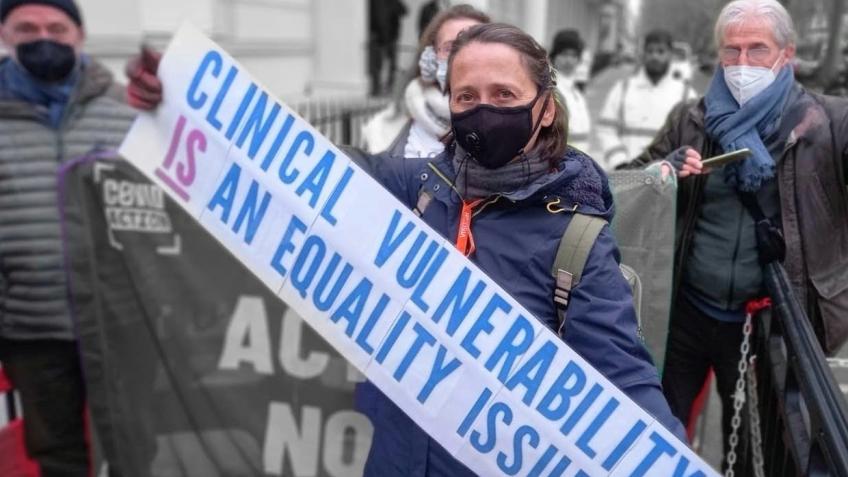
JCVI advises narrower eligibility for autumn 2025 and spring 2026
The JCVI advised offering vaccination only to adults aged 75 and over, care home residents for older adults, and people aged six months and over who are immunosuppressed. This removed two groups: all adults aged 65 to 74, and people under 65 in a clinical risk group who are not immunosuppressed.[44]
- 31st January 2025
Module 4 closing statements delivered for CVF
Adam Wagner, Hayley Douglas and Lameesa Iqbal represented Clinically Vulnerable Families, instructed by Slater and Gordon, at the closing statements for Module 4 (vaccines and therapeutics).[45]
- 16th July 2025
JCVI keeps the same groups for autumn 2026 and spring 2027
Advice for autumn 2026 and spring 2027 maintained eligibility for adults aged 75 and over, care home residents and immunosuppressed people aged six months and over.[46]
- October 2025
CVF publishes a report on children and young people
The report highlights school attendance and deregistration issues faced by Clinically Vulnerable children.[43]
- 27th October 2025
Awaab's Law comes into force
Social landlords in England must now investigate and fix dangerous damp and mould within set deadlines. The law is named after two-year-old Awaab Ishak, who died in December 2020 from prolonged exposure to mould in his family's flat in Rochdale.[63]
- 20th November 2025
Modules 2, 2A, 2B and 2C report published
The Inquiry published its report on core decision-making and political governance.[40]
Chapter Six
The Inquiry reports, 2026
- February 2026
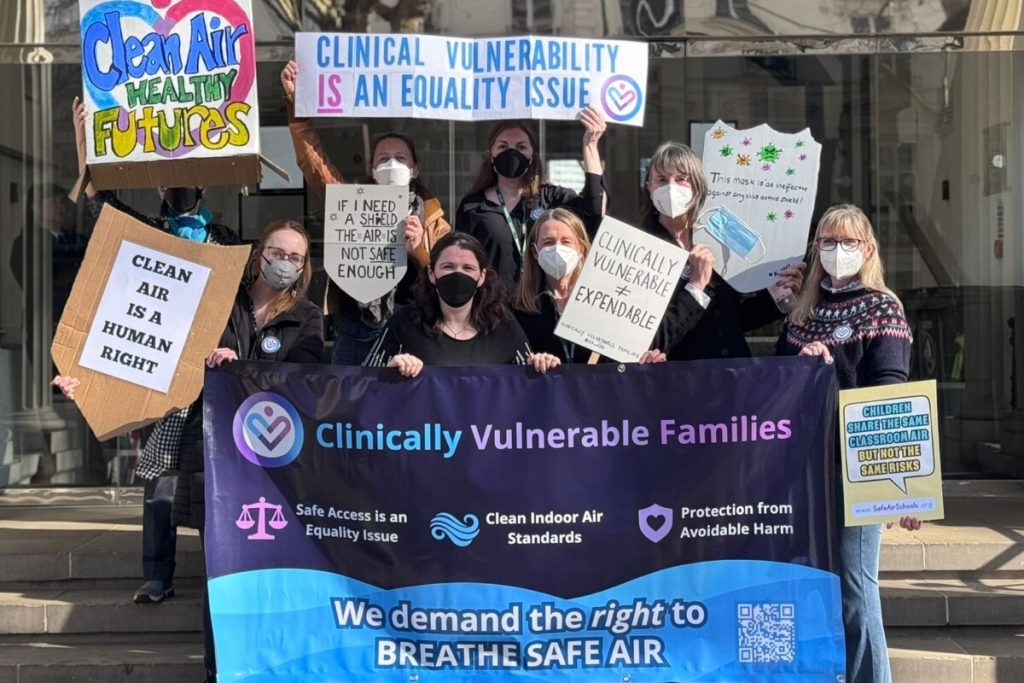
CVF Impact on Society report submitted to the Inquiry
CVF's report, based on national survey data and case studies, was published alongside the Inquiry's Impact on Society hearings.[43]
- 19th March 2026
Module 3 report on healthcare published
The Inquiry published its report on the impact of the pandemic on the UK's healthcare systems. CVF, a Core Participant, reported that the report criticised infection control policy, recommended prioritising HEPA filtration in NHS settings, said there was no good reason to prevent patients from wearing face masks, and documented DNACPR notices placed without consent.[40][47][5] Read our response →
- 16th April 2026
Module 4 report on vaccines and therapeutics published
CVF reported that the report states protecting immunocompromised people through prophylactics must become a priority, and that it found the children's vaccine rollout was too slow, too limited and too short.[40][48][49] Read our response →
- 29th June 2026
Wearing a mask can now be an arrestable offence at protests
Sections 157 to 159 of the Crime and Policing Act 2026, which received Royal Assent on 29th April 2026, came into force. An inspector or above can designate an area at a protest where wearing anything that conceals identity is an offence, punishable by up to a month in prison or a fine of up to £1,000. A defence exists for covering the face for health, religious or work reasons, but Liberty notes it applies only after arrest or when a charging decision is made.[50][51][52]
- 14th July 2026
Module 5 report on procurement published
The Inquiry published its report on procurement and distribution of key healthcare equipment, including PPE, ventilators and oxygen.[40]
- 16th July 2026
JCVI advises raising the age threshold to 80 for autumn 2027
For autumn 2027 the JCVI advised offering vaccination to adults aged 80 and over, care home residents for older adults, and immunosuppressed people aged six months and over. This would remove adults aged 75 to 79.[53]
- 14th September 2026
UK government responds to the Module 3 report
The government response covers infection prevention and control governance, workforce, surge planning and advance care planning, and says data systems should be improved to identify people at high risk in a future pandemic.[54]
- 24th September 2026
CVF responds to NICE's review of Covid antiviral guidance
NICE proposed withdrawing its guidance on the antivirals Paxlovid, molnupiravir (Lagevrio) and remdesivir (Veklury), and with it the requirement for the NHS in England to fund them. As a registered stakeholder, CVF found that NICE's evidence review had missed a major 2026 study of more than 10 million patients, which found Paxlovid still cut hospital admissions by almost half and deaths by more than two-thirds.[56] Its higher-risk group also covered conditions beyond NICE's current list: diabetes, asthma, COPD, high blood pressure, heart disease, chronic kidney disease, chronic liver disease and cancer. CVF asked NICE to reconsider the groups it removed in May 2025 too. CVF also argued that lower Covid rates across the population do not lower the risk for the people still eligible, that a lack of new trials is not evidence the medicines no longer work, and that each medicine should be judged on its own evidence.[55]
Sources
Show all 63 sourcesHide sources
- Green Book, chapter 19: Influenza, UK Health Security Agency, version dated 25th August 2026. https://assets.publishing.service.gov.uk/media/6838317b5150d70c85aafab9/Green-book-chapter-19-influenza-28May2025.pdf
- ’Flu vaccination programme in England (HC 853, 2017-19), House of Commons Science and Technology Committee, 2018-19 session. https://publications.parliament.uk/pa/cm201719/cmselect/cmsctech/853/85304.htm
- The 2009 Influenza Pandemic: an independent review of the UK response to the 2009 influenza pandemic (Dame Deirdre Hine), Cabinet Office, July 2010. https://assets.publishing.service.gov.uk/media/5a7975f1ed915d0422068a10/the2009influenzapandemic-review.pdf
- Our Work, Clinically Vulnerable Families, accessed 30th September 2026. https://www.clinicallyvulnerable.org/about/ourwork
- Covid Inquiry Module 3, healthcare report: 'We came masked. We changed minds', Clinically Vulnerable Families, 22nd March 2026. https://www.clinicallyvulnerable.org/post/covid-inquiry-module-3-healthcare-report
- Staying at home and away from others (social distancing), UK Government (GOV.UK), spring 2020 (publication date not shown on document). https://assets.publishing.service.gov.uk/government/uploads/system/uploads/attachment_data/file/883116/Staying_at_home_and_away_from_others__social_distancing_.pdf
- Coronavirus, guidance for the over-70s and age discrimination, House of Lords Library, 2020 (article undated on page). https://lordslibrary.parliament.uk/coronavirus-guidance-for-the-over-70s-and-age-discrimination/
- The CEVPS: data sharing during coronavirus, Institute for Government, 2022. https://www.instituteforgovernment.org.uk/sites/default/files/2022-12/critically-extremely-vulnerable-people-service.pdf
- Covid-19: Supporting the vulnerable during lockdown (HC 938), House of Commons Committee of Public Accounts, 21st April 2021. https://committees.parliament.uk/publications/5534/documents/55037/default/
- Caring for people at highest clinical risk from COVID-19: FAQs for patients, NHS England, 1st April 2020. https://www.england.nhs.uk/coronavirus/wp-content/uploads/sites/52/2020/03/20200401-FAQs-Patients.pdf
- Coronavirus: Health Protection (Coronavirus, Wearing of Face Coverings on Public Transport) (England) Regulations 2020, Crown Prosecution Service. https://www.cps.gov.uk/legal-guidance/coronavirus-health-protection-coronavirus-wearing-face-coverings-public-transport
- Shielding update letter to NHS (Whitty and Powis), NHS England, 22nd June 2020. https://www.england.nhs.uk/coronavirus/documents/shielding-update-letter-to-nhs/
- Coronavirus: Health Protection (Coronavirus, Wearing of Face Coverings in a Relevant Place) (England) Regulations 2020, Crown Prosecution Service. https://www.cps.gov.uk/legal-guidance/coronavirus-health-protection-coronavirus-wearing-face-coverings-relevant-place
- Covid-19 regulations: face coverings – updates, House of Lords Library. https://lordslibrary.parliament.uk/covid-19-regulations-face-coverings-updates/
- Government pauses shielding guidance for clinically extremely vulnerable people across England, The Health Foundation, COVID-19 policy tracker, event dated 1st August 2020. https://covid19.health.org.uk/theme/government-pauses-shielding-guidance-clinically-extremely-vulnerable-people-across-england
- A (brief) history of shielding (Katherine Runswick-Cole), University of Sheffield, iHuman, 4th November 2020. https://sheffield.ac.uk/ihuman/news/brief-history-shielding
- Update on guidance for clinically extremely vulnerable individuals and actions for acute trusts (letter from Prof Stephen Powis), NHS England, autumn 2020 (ahead of the November restrictions). https://www.england.nhs.uk/coronavirus/documents/c0830-update-on-guidance-for-clinically-extremely-vulnerable-individuals-and-actions-for-acute-trusts/
- Understanding the needs of those most clinically vulnerable to COVID-19, The Health Foundation, December 2020. https://www.health.org.uk/reports-and-analysis/analysis/understanding-the-needs-of-those-most-clinically-vulnerable-to-covid
- Unequal impact? Coronavirus, disability and access to services: full report, House of Commons Women and Equalities Committee, 22nd December 2020. https://committees.parliament.uk/publications/4068/documents/40461/default/
- Joint Committee on Vaccination and Immunisation: advice on priority groups for COVID-19 vaccination, 30th December 2020, JCVI, via GOV.UK, 30th December 2020 (updated 6th January 2021). https://gov.uk/government/publications/priority-groups-for-coronavirus-covid-19-vaccination-advice-from-the-jcvi-30-december-2020/joint-committee-on-vaccination-and-immunisation-advice-on-priority-groups-for-covid-19-vaccination-30-december-2020
- Coronavirus and clinically extremely vulnerable people in England: 18th January to 30th January 2021, Office for National Statistics, 2021. https://www.ons.gov.uk/peoplepopulationandcommunity/healthandsocialcare/conditionsanddiseases/bulletins/coronavirusandclinicallyextremelyvulnerablepeopleinengland/18januaryto30january2021
- UK COVID-19 vaccines delivery plan, Department of Health and Social Care, 13th January 2021. https://www.gov.uk/government/publications/uk-covid-19-vaccines-delivery-plan/uk-covid-19-vaccines-delivery-plan
- GPs to begin cohort 6 Covid-19 jabs from 15th February, second doses from 1st March, GPonline, 12th February 2021. https://www.gponline.com/gps-begin-cohort-6-covid-19-jabs-15-february-second-doses-1-march/article/1707208
- NHS offers COVID jab to clinically vulnerable and people 65 to 69, NHS England, February 2021. https://www.england.nhs.uk/2021/02/nhs-offers-covid-jab-to-clinically-vulnerable-and-people-65-to-69/
- New technology to help identify those at high risk from COVID-19, GOV.UK (Department of Health and Social Care), 16th February 2021. https://www.gov.uk/government/news/new-technology-to-help-identify-those-at-high-risk-from-covid-19
- Coronavirus and clinically extremely vulnerable (CEV) people in England: 4th April to 23rd April 2022, Office for National Statistics, 2022. https://www.ons.gov.uk/peoplepopulationandcommunity/healthandsocialcare/conditionsanddiseases/bulletins/coronavirusandclinicallyextremelyvulnerablepeopleinengland/4aprilto23april2022
- The UK Covid-19 Inquiry (explainer), Institute for Government, updated 2026. https://www.instituteforgovernment.org.uk/explainer/covid-public-inquiry
- Parents, pupils, teachers and students: find out what Step 4 of the Covid roadmap means for you, Department for Education, July 2021. https://educationhub.blog.gov.uk/2021/07/parents-pupils-teachers-and-students-find-out-what-step-4-of-the-covid-roadmap-means-for-you/
- JCVI issues advice on third dose vaccination for severely immunosuppressed, UK Health Security Agency newsroom, 1st September 2021. https://ukhsa-newsroom.prgloo.com/news/jcvi-issues-advice-on-third-dose-vaccination-for-severely-immunosuppressed
- Letter to patients: end of the shielding programme, Department of Health and Social Care, via GOV.UK, 17th September 2021. https://assets.publishing.service.gov.uk/media/6245b4868fa8f52773d76ac7/Letter_to_patients_-_end_of_the_shielding_programme.pdf
- UK Health Security Agency (explainer), Institute for Government, accessed 30th September 2026. https://www.instituteforgovernment.org.uk/explainer/uk-health-security-agency
- When do I have to wear a face mask? Liberty. https://www.libertyhumanrights.org.uk/advice_information/when-do-i-have-to-wear-a-face-mask/
- Launch of new policy for treatment of Covid-19 with neutralising monoclonal antibodies (nMABs), Community Pharmacy South Central, December 2021. https://www.cpsc.org.uk/news/latest-cpsc-news/launch-new-policy-treatment-covid-19-neutralising-monoclonal-antibodies-nmabs
- Living with Covid-19 (research briefing CBP-9474), House of Commons Library, 2022. https://commonslibrary.parliament.uk/research-briefings/cbp-9474/
- RAPID C-19 Oversight Group report to the Chief Medical Officer: Evusheld 2022, UK Government (GOV.UK), 2022 (recommendations dated 30th May and 24th August 2022). https://assets.publishing.service.gov.uk/media/633c1b388fa8f5642fee801e/RAPID-C-19-Oversight-Group-report-to-Chief-Medical-Officer-Evusheld-2022.pdf
- NHS England and NHS Improvement: next steps on infection prevention and control, 1st June 2022 (as reproduced by the Patient Safety Learning hub). https://www.pslhub.org/learn/coronavirus-covid19/guidance/nhs-england-and-nhs-improvement-next-steps-on-infection-prevention-and-control-1-june-2022-r6965/
- Press / Media, Clinically Vulnerable Families, accessed 30th September 2026. https://www.clinicallyvulnerable.org/news
- NICE issues final draft guidance for tixagevimab-cilgavimab (Evusheld) for prevention of COVID-19, Scottish Medicines Consortium, 5th May 2023. https://scottishmedicines.org.uk/about-us/latest-update/nice-issues-final-draft-guidance-for-tixagevimab-cilgavimab-evusheld-for-prevention-of-covid-19/
- Tixagevimab plus cilgavimab for preventing COVID-19 (TA900), recommendations, NICE, 2023 (publication date not shown on page fetched). https://www.nice.org.uk/guidance/ta900/chapter/1-Recommendations
- Inquiry Module Reports, UK Covid-19 Inquiry, accessed 30th September 2026. https://covid19.public-inquiry.uk/reports/
- Covid inquiry report 'overlooked the specific needs' of clinically vulnerable people, The Fitzrovia News, 21st July 2024. https://fitzrovianews.com/2024/07/21/covid-inquiry-report-overlooked-the-specific-needs-of-clinically-vulnerable-people/
- JCVI advises on eligible groups for autumn COVID-19 vaccination, GOV.UK (UKHSA), 2nd August 2024. https://www.gov.uk/government/news/jcvi-advises-on-eligible-groups-for-autumn-covid-19-vaccination
- Reports, Clinically Vulnerable Families, accessed 30th September 2026. https://www.clinicallyvulnerable.org/reports
- JCVI statement on COVID-19 vaccination in 2025 and spring 2026, Joint Committee on Vaccination and Immunisation, via GOV.UK, 14th November 2024. https://gov.uk/government/publications/covid-19-vaccination-in-2025-and-spring-2026-jcvi-advice/jcvi-statement-on-covid-19-vaccination-in-2025-and-spring-2026
- Closing statements delivered in Module 4 of the UK Covid-19 Inquiry: vaccines and therapeutics, Doughty Street Chambers, 31st January 2025. https://www.doughtystreet.co.uk/news/closing-statements-delivered-module-4-uk-covid-19-inquiry-vaccines-and-therapeutics
- JCVI statement on COVID-19 vaccination in autumn 2026 and spring 2027, Joint Committee on Vaccination and Immunisation (copy hosted by NITAG Resource), 16th July 2025. https://www.nitag-resource.org/sites/default/files/2025-08/JCVI%20statement%20on%20COVID-19%20vaccination%20in%20autumn%202026%20and%20spring%202027.pdf
- Covid Inquiry Module 3 Report Published, Matrix Chambers, 19th March 2026. https://www.matrixlaw.co.uk/news/covid-inquiry-module-3-report-published/
- UK Covid-19 Inquiry: Vaccines and therapeutics (Module 4) report, GOV.UK, 16th April 2026. https://www.gov.uk/government/publications/uk-covid-19-inquiry-vaccines-and-therapeutics-module-4-report
- Covid Inquiry Module 4, vaccines and therapeutics report: 'A success story, yes. But for whom?', Clinically Vulnerable Families, April 2026. https://www.clinicallyvulnerable.org/post/covid-inquiry-module-4-vaccines-and-therapeutics-report-a-success-story-yes-but-for-whom
- Crime and Policing Act 2026: explaining the new protest restrictions, Liberty. https://www.libertyhumanrights.org.uk/advice_information/crime-and-policing-act-2026-explaining-the-new-protest-restrictions/
- Circular 004/2026: Crime and Policing Act 2026, Home Office. https://www.gov.uk/government/publications/circular-0042026-crime-and-policing-act-2026/circular-0042026-crime-and-policing-act-2026-accessible
- The Crime and Policing Act 2026 (Commencement No. 1) Regulations 2026 (SI 2026/689). https://www.legislation.gov.uk/uksi/2026/689/regulation/2/made
- JCVI statement on COVID-19 vaccination in autumn 2027, Joint Committee on Vaccination and Immunisation, via GOV.UK, 16th July 2026. https://www.gov.uk/government/publications/covid-19-vaccination-in-autumn-2027-jcvi-advice/jcvi-statement-on-covid-19-vaccination-in-autumn-2027
- UK government response to the Covid-19 Inquiry Module 3 report, GOV.UK, 14th September 2026. https://www.gov.uk/government/publications/uk-government-response-to-the-covid-19-inquiry-module-3-report/uk-government-response-to-the-covid-19-inquiry-module-3-report
- NICE review proposal: medicines for treating COVID-19 (TA878, TA1056 and TA971), comments closed 24th September 2026. https://www.nice.org.uk/guidance/ta1056/consultation/html-content-11
- Ebell MH, Kurotschka PK. Meta-analysis of 47 cohort studies of nirmatrelvir-ritonavir in the Omicron era (10,791,211 patients). Journal of General Internal Medicine, 12th May 2026.
- The Great Smog of 1952, Met Office. https://weather.metoffice.gov.uk/learn-about/weather/case-studies/great-smog
- The Great Smog of 1952, The National Archives blog. https://blog.nationalarchives.gov.uk/the-great-smog-of-1952/
- Evaluation of the Heatwave Plan for England, Policy Innovation and Evaluation Research Unit (LSHTM). https://piru.ac.uk/assets/uploads/files/piru-heatwave-plan-lay-summary-aa.pdf
- More customers in vulnerable situations to receive help under the Priority Services Register, Ofgem, October 2016. https://www.ofgem.gov.uk/press-release/more-customers-vulnerable-situations-receive-help-under-priority-services-register
- Historic inquest conclusion that air pollution contributed to death, Doughty Street Chambers. https://www.doughtystreet.co.uk/news/historic-inquest-conclusion-air-pollution-contributed-death
- NHS shingles vaccine will be offered to almost one million more people, NHS England, July 2023. https://www.england.nhs.uk/2023/07/nhs-shingles-vaccine-will-be-offered-to-almost-one-million-more-people/
- How Awaab's Law changes the rules on hazards in social housing, Shelter. https://england.shelter.org.uk/professional_resources/news_and_updates/how_awaabs_law_changes_the_rules_on_hazards_in_social_housing
If you spot an error or a missing milestone, please tell us through the contact page. Last reviewed: 30th September 2026.