
Many of the places that matter most in daily life, such as schools, workplaces, clinics and venues, are still hard or unsafe for people at higher risk from infections and other health threats. This hub brings together practical guidance for organisations, checked against official UK sources, on how to make those places safer and more welcoming.
Who this is for
This page is written for schools, employers, healthcare providers, event and venue operators, councils and other local authorities, transport operators, charities, and faith and community groups. It covers more than Covid-19: airborne and other infections, allergies, air pollution, extreme heat and cold, access to treatment, and the legal duty to make reasonable adjustments. If you are not sure who counts as Clinically Vulnerable, see what we mean by clinical vulnerability, and read some of the stories families have shared with us.
How to use this hub
Start with the five actions below, then jump to the topic cards that fit your organisation. Each card gives a reason it matters, some practical actions, and links to the official sources we relied on. Clinically Vulnerable people differ widely in their needs, so ask the people you serve and employ what would help them (see Consulting and communicating). This hub will grow, and we would like to hear what is missing or wrong: please get in touch. For the basics of indoor air, see our page on clean air.
CVF is not a medical provider. This is practical guidance for organisations, reviewed against official sources. It is not medical advice, and it does not replace advice from an individual’s own clinical team or your own legal and health and safety advice.
Start here: five things any organisation can do this month
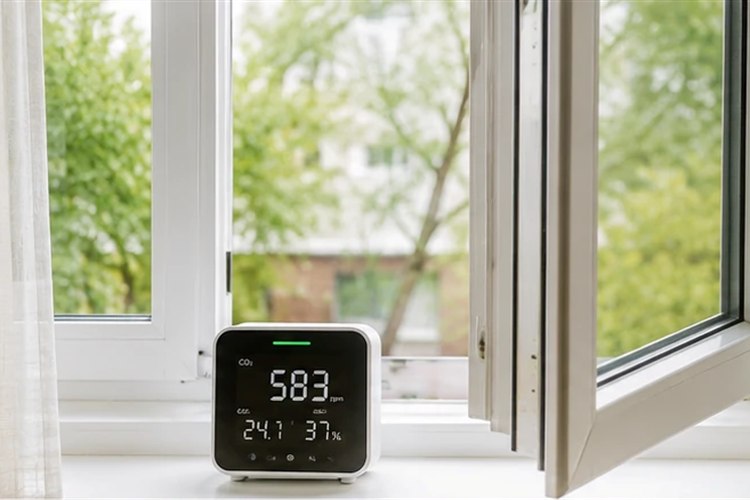 Check how well your main rooms are ventilated: open windows and doors where you can, and use a CO₂ monitor to spot rooms that need attention (HSE: using CO₂ monitors).
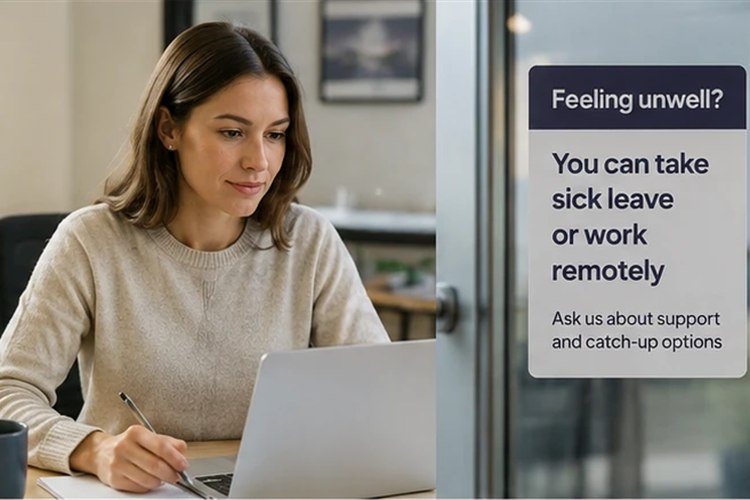 Make it easy for people with symptoms to stay away, by offering sick leave, remote options or catch-up support without penalty (UKHSA: people with symptoms of a respiratory infection).
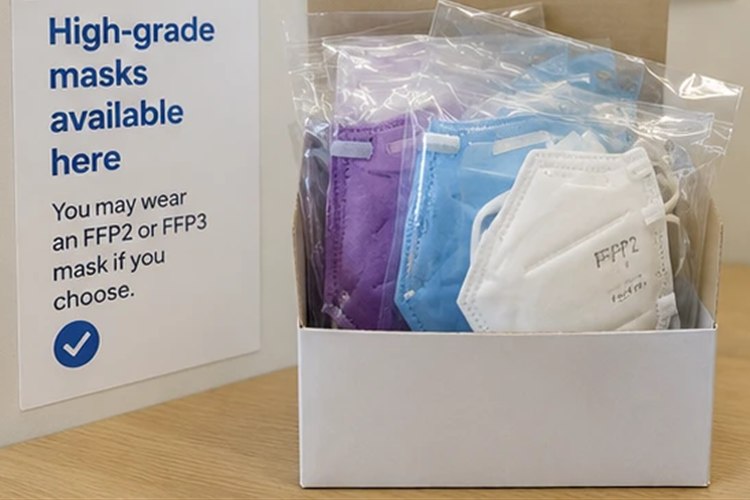 Keep high-grade FFP2 or FFP3 masks available, and say clearly that people may wear them (UKHSA: living safely with respiratory infections).
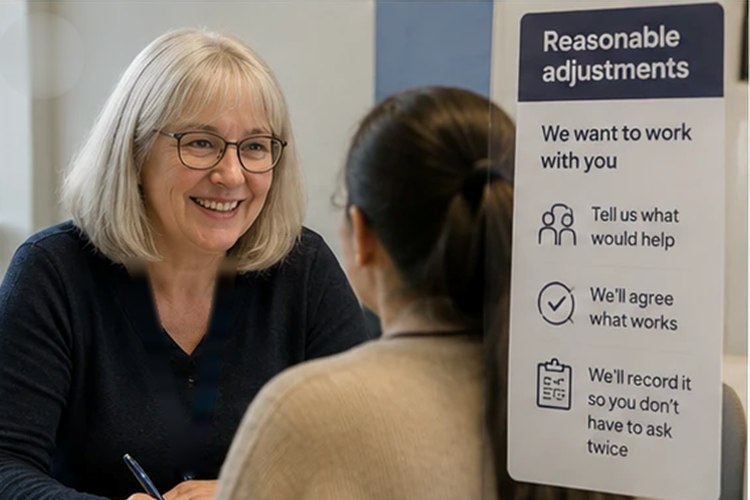 Ask Clinically Vulnerable staff, pupils, patients or visitors what would help them, for example because of a health condition or a serious allergy (and where they keep their adrenaline auto-injector). People should not have to say what their condition is, only what they need. Record agreed adjustments so nobody has to ask twice (EHRC: what are reasonable adjustments? | EHRC: disability and long-term health conditions | Severe allergies and anaphylaxis).
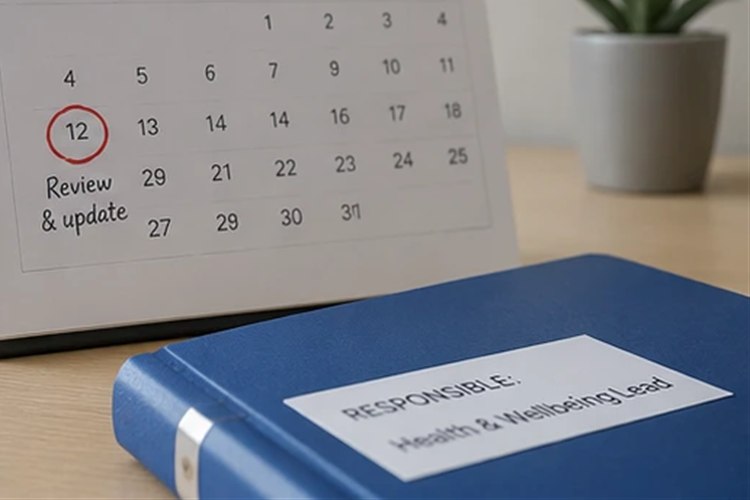 Name one person who is responsible for this work, and review it at least once a year against official guidance (Acas: reasonable adjustments at work).
Guidance by topic
Clean air and ventilation
Why it matters: Opening doors and windows helps remove stale air that could contain virus particles, which reduces the spread of infection (UKHSA), and in workplaces adequate ventilation is also a legal duty (HSE). Clean air protects all staff, particularly in the winter months, and helps reduce sickness absence.
- Use natural ventilation (doors, windows, trickle vents) wherever you can, and check that any mechanical systems are working and maintained.
- Use CO₂ monitors to check how well each room is ventilated. HSE’s figure of 1,500 ppm, from its 2021 Covid guidance, only marks the point where the air in a room is poor; it is not a safe level for airborne infections. CO₂ shows how much of the air has already been breathed out by other people, so for infection risk, lower is better. The British Council for Offices’ 2023 Guide to Specification recommends keeping CO₂ below 800 ppm, with 14 litres of fresh air per second per person, in line with the European REHVA guidance and ASHRAE Standard 241 on controlling infectious aerosols.
- Ideally use a continuous monitor, such as an Aranet4 or another reputable, high-quality NDIR sensor, so you can see how levels change through the day as occupancy and activity change.
- In education settings, DfE guidance describes readings under 800 ppm as good, 800 to 1500 ppm as adequate, and over 1500 ppm as poor, and suggests sensors sit away from doors and windows at seated head height. Clinically Vulnerable pupils and staff, including people with asthma, especially need good ventilation.
- Where fresh air cannot be improved enough, consider HEPA air cleaning units as an addition, not a substitute. DfE says they do not improve ventilation or lower CO₂, and that filters need regular replacement. But they can make the air safer, particularly where ventilation upgrades are costly or difficult.
- In cold weather, you can open higher-level windows and ventilate between activities.
Go further: HSE: ventilation in the workplace | HSE: using CO₂ monitors | BCO: Guide to Specification 2023 | REHVA: ventilation guidance | ASHRAE Standard 241 | DfE: ventilation and air quality in education and childcare settings
Masks and respiratory protection
Why it matters: UKHSA advises wearing a mask when in contact with people at higher risk and when respiratory viruses are circulating widely. High-grade FFP2 and FFP3 masks give the best protection, and people who choose to wear one need an environment where that is normal.
- State in writing that anyone may wear a mask, including staff, pupils, patients and visitors, and that they will not be challenged for doing so. Nothing in current DfE guidance stops a pupil wearing one, and we’re working with the Department so its revised guidance supports Clinically Vulnerable pupils who choose to.
- Keep a stock of high-grade FFP2 or FFP3 masks, in more than one size, for people who need one. A good seal around the nose and mouth matters as much as the mask itself.
- Ask staff who work closely with higher-risk people to wear FFP2 or FFP3 masks at times of high infection rates, and explain why.
- Where your work needs respirators (for example in health and care), follow HSE fit-testing guidance: a respirator only protects if it fits the person wearing it.
- Do not treat masks as a replacement for ventilation and staying home when unwell. They work best as one layer among several.
Go further: UKHSA: living safely with respiratory infections | HSE: RPE fit testing (INDG479)
Infection prevention and sickness policies
Why it matters: Infections spread fastest when people who are unwell feel they have to turn up, and UKHSA advises people with symptoms to avoid close contact with those at higher risk.
- Write a sickness policy that lets people with respiratory symptoms and a high temperature, or who feel too unwell for normal activities, stay at home without penalty. UKHSA advises that they try to do so and to work from home if they can.
- Do not reward perfect attendance in ways that push people to come in ill.
- For norovirus, UKHSA guidance for schools and early years advises children to stay home for 48 hours after symptoms stop, and says alcohol-based hand sanitisers are not effective against it, so provide soap, warm water and time to wash.
- Keep handwashing facilities stocked, and encourage tissues and covering coughs and sneezes, as UKHSA advises.
- Where you serve or sell food, follow Food Standards Agency guidance, and keep anyone who has had sickness or diarrhoea away from food preparation for 48 hours after symptoms stop.
- Offer a quiet, ventilated space for anyone who becomes unwell on site while they arrange to go home.
Go further: UKHSA: people with symptoms of a respiratory infection | Education Hub: norovirus information for schools and early years
Planning for the next outbreak
Why it matters: The Inquiry found that the four governments lacked adequate preparation and acted too slowly at first, and organisations that plan ahead can protect people sooner.
- Write a simple outbreak plan that says who decides, what triggers extra measures and how you will tell people.
- Plan for those at highest risk first. The Inquiry’s Module 2 recommendation 8, as summarised by the Scottish Government, is to agree a plan to identify the people most at risk and those harmed by the response.
- Keep remote and hybrid options working in peacetime, so they are ready when needed.
- Hold stocks of FFP2 or FFP3 masks, tests and cleaning supplies, and know where to buy ventilation and air cleaning equipment. Write ventilation and air quality standards into procurement.
- Train staff, and run an exercise to test the plan, then monitor and review it each year using measures such as CO₂ readings, absence and feedback from Clinically Vulnerable people.
Go further: UK Covid-19 Inquiry: Module 2 report, easy read | UK Government response to the Inquiry’s Module 3 report
Severe allergies and anaphylaxis
Why it matters: The NHS describes anaphylaxis as a life-threatening allergic reaction that happens very quickly. It needs adrenaline and a 999 call straight away. For people with severe allergies, how a building, event or meal is run can decide whether it is safe for them to take part.
- Ask staff, pupils, patients and visitors about serious allergies, and record what each person needs, including where they keep their adrenaline auto-injectors.
- Make sure staff know the signs of anaphylaxis, such as swelling of the throat or tongue, difficulty breathing and feeling faint, and what the NHS says to do: use the person’s adrenaline auto-injector, call 999, help them lie down (or sit up slowly if they are struggling to breathe), and use a second auto-injector after 5 minutes if they have not improved. They should not stand or walk, even if they feel better.
- Include severe allergies in your first aid needs assessment, so first aiders know how to recognise anaphylaxis and help someone use their auto-injector.
- Schools can keep spare adrenaline auto-injectors for emergencies, following Department of Health and Social Care guidance.
- Wherever food is served, give accurate information about the 14 major allergens and label food in line with Food Standards Agency guidance.
- Agree reasonable adjustments, such as advance information about food and activities or allergen-aware areas, so people do not have to choose between their safety and taking part.
Go further: NHS: anaphylaxis | HSE: first aid needs assessment | DHSC: emergency adrenaline auto-injectors in schools | FSA: allergen guidance for food businesses | Anaphylaxis UK
Heat, cold and air pollution
Why it matters: The Adverse Weather and Health Plan exists to protect people and communities from the health effects of adverse weather, and air pollution can make lung conditions worse.
- Sign up to UKHSA and Met Office weather-health alerts, and agree in advance who acts on them.
- In hot weather, follow the UKHSA advice for education settings on shade, water, timetable changes and ventilation, and check on people who are more vulnerable.
- Use the UKHSA hot weather guidance for professionals who work with vulnerable people, including social care, healthcare and homelessness services.
- In cold weather, keep indoor spaces warm, watch for icy routes in and out, and check on people who are more vulnerable.
- If wildfire smoke is affecting air quality, follow advice from the emergency services, which may include keeping windows and doors closed.
- On high pollution days, Asthma + Lung UK suggests people with lung conditions limit outdoor exercise and check forecasts such as Defra’s Daily Air Quality Index. Consider flexibility over outdoor activities.
- Reduce your own contribution to pollution, for example with anti-idling measures around schools, which Asthma + Lung UK encourages.
Go further: UKHSA: Adverse Weather and Health Plan | UKHSA: hot weather, teachers and educational professionals | Asthma + Lung UK: lowering your risk from air pollution | Prepare: cold weather, snow and ice | Prepare: wildfires
Power cuts, flooding and emergencies
Why it matters: People who rely on powered medical equipment, medicines that must be kept cold, or a steady water supply can be at risk quickly in a power cut, water outage or flood.
- Encourage people at higher risk to join their energy supplier’s and water company’s free Priority Services Register, so they get extra help and warnings.
- Ask people what they need if the power or water goes off, for example for equipment, medicines in a fridge, or a device that needs water, and build it into your emergency and business continuity plans.
- Keep the number to report a power cut to hand: 105 in England, Scotland and Wales, and 03457 643643 in Northern Ireland.
- Sign up for flood warnings by phone, text or email. People who need extra help can ask Floodline to send warnings to a friend or relative too.
- If people have to leave a building or go to a rest centre, plan for those who need a step-free route, their medicines and equipment, or a less crowded space because of infection risk.
Go further: Ofgem: Priority Services Register | Prepare: power cuts | Prepare: water supply interruptions | Prepare: flooding | GOV.UK: sign up for flood warnings
Healthcare settings
Why it matters: People who are immunocompromised or seriously unwell often have to spend time in clinics and hospitals, where they meet other patients who may be infectious.
- Follow the National Infection Prevention and Control Manual for England, including standard precautions that apply to all staff, in all care settings, at all times, and transmission-based precautions including airborne precautions and patient placement.
- Make sure staff who need respirators are fit-tested. The UK Government, responding to the Covid-19 Inquiry, has committed to explore how to improve fit-testing rates and capability.
- Give patients who are at higher risk the option of a separate, ventilated waiting area, remote appointments, or appointments at quieter times.
- Explain any visiting or access restrictions clearly and give reasons. The Inquiry’s Module 3 Recommendation 2, as summarised in the Government response, says communications must clearly explain the measures and why they apply.
- Record, with consent, who is at higher risk so that measures can be targeted, following the direction of the Inquiry’s recommendation on better identification of those at higher risk.
- Make sure patients at higher risk know they may be eligible for Covid-19 and ’flu antiviral treatment, and can be tested and assessed quickly. The NHS says Covid-19 treatments need to be given quickly after symptoms start to work, and UKHSA says ’flu antivirals work best when started within 48 hours of symptoms.
Go further: NHS England: IPC manual, chapter 1 (SICPs) | NHS England: IPC manual, chapter 2 (TBPs) | UK Government response to the Inquiry’s Module 3 report | NHS: treatments for COVID-19 | UKHSA: antivirals for ’flu
Schools and education
Why it matters: Children with health conditions have the same right to be in education as their classmates, and schools in England have a statutory duty to support pupils with medical conditions.
- Follow the DfE statutory guidance on supporting pupils with medical conditions, including individual healthcare plans, parental agreement for medicines, and records of medicines given and staff training.
- On allergies, Anaphylaxis UK describes Benedict’s Law as requiring, from September 2026, a whole-school allergy policy, staff training, spare in-date adrenaline auto-injectors and individual plans for pupils with serious allergies. Check the DfE statutory guidance itself for the exact requirements.
- Use the training and factsheets from allergy charities, such as Anaphylaxis UK’s AllergyWise for Schools and Allergy UK’s resources.
- Monitor CO₂ and ventilate classrooms as DfE guidance describes, and make sure families know what is done.
- Keep children with health conditions in the loop during absence, offering remote access to lessons or catch-up support when they cannot attend.
- For heat, UKHSA guidance says that advice should be sought from the clinical team of children with complex health conditions or clinical vulnerability, and shared with relevant staff.
Go further: DfE: supporting pupils at school with medical conditions | Anaphylaxis UK: Benedict’s Law | Allergy UK
Workplaces
Why it matters: Employers must ensure enclosed workplaces have sufficient fresh or purified air, and the Equality Act 2010 places duties on employers that can include reasonable adjustments in individual cases.
- Meet your ventilation duty under regulation 6 of the Workplace (Health, Safety and Welfare) Regulations, as HSE explains, and monitor with CO₂ monitors.
- Offer remote or hybrid working where the job allows it. The EHRC has published resources on hybrid working as a reasonable adjustment.
- Agree adjustments in a conversation with the employee, such as a ventilated or private space, flexible hours or masks being worn by colleagues. Acas says employers pay for reasonable adjustments.
- Make sickness absence policies supportive, so that colleagues with symptoms stay at home.
- Train line managers to handle adjustment requests, and keep the agreed arrangements in writing.
Go further: HSE: ventilation in the workplace | Acas: reasonable adjustments at work | EHRC: hybrid working guidance
Events, venues and public spaces
Why it matters: Crowded, enclosed spaces are the hardest places for people at higher risk, and UKHSA advice for anyone with symptoms is to avoid crowded enclosed spaces.
- Publish what you do about ventilation, cleaning, masks and allergens before the event, so people can decide whether to come.
- Use outdoor space, open doors and windows, and CO₂ monitors in enclosed rooms, following the HSE approach of repeated readings while occupied.
- Offer a quieter, less crowded session, a designated seating area with good airflow, or a livestream or recording.
- Provide allergen information in line with Food Standards Agency guidance, including signage templates.
- Ask in booking forms, without pressure, what access needs people have, and act on the answers.
Go further: HSE: using CO₂ monitors | FSA: allergen guidance for food businesses
Transport and travel
Why it matters: Many Clinically Vulnerable people cannot avoid public transport for work, school or medical appointments, and UKHSA advises people with symptoms to avoid it.
- Keep vehicle and station ventilation working and maintained, and use windows and doors wherever you can.
- Make clear that passengers may wear masks, and that staff will not challenge them.
- Offer flexibility for people who need to travel at quieter times, such as flexible ticketing and seat reservations.
- Keep passenger assistance and accessibility services well publicised, and as easy to book as possible.
- For health-related trips, consider non-emergency patient transport options with lower exposure.
Go further: UKHSA: people with symptoms of a respiratory infection | UKHSA: living safely with respiratory infections
Risk assessments, reasonable adjustments and the law
Why it matters: Everything on this page, from clean air to allergies, matters most to people at higher risk. Health and safety law expects organisations to assess risks and protect people, and under the Equality Act 2010 employers and service providers can also have a duty to make reasonable adjustments. Being Clinically Vulnerable is not itself a legal category, so what applies depends on each person’s circumstances.
- Include people at higher risk in your risk assessment. HSE says some workers have particular requirements, that you should involve staff, and that you must check your controls are working and review them when things change. If you employ five or more people, record your significant findings.
- Ask, privately and without pressure, what would help, and agree a plan with the person. Review it when infection levels, the setting or their health change.
- Treat the Equality Act duty as anticipatory. EHRC guidance for education providers says they should plan ahead rather than wait for each request.
- Consider changes to policies and practices, physical features and the provision of aids or services. Acas lists flexible hours, layout changes and equipment among examples.
- Weigh reasonableness case by case: whether the change is effective, practical and affordable, and whether it harms others’ health and safety (Acas).
- If you are a public body, you also have the public sector equality duty. Take specialist advice on how it applies to you.
- Keep a record of requests, decisions and reasons, and review them regularly.
Adjustments that can protect someone at higher risk include:
- Better ventilation, or a HEPA air cleaner, where the person works, learns or waits.
- Making clear they may wear an FFP2 or FFP3 mask, and asking people working closely with them to wear one when infections are high.
- Remote, hybrid or flexible working, remote appointments, or a livestream or recording of an event.
- Quieter times, a separate or well-ventilated space, or a seat away from crowds.
- Early warning of outbreaks or cases, so the person can decide what to do.
- Clear allergen information and an agreed emergency plan for anyone with a severe allergy.
Go further: HSE: managing risks and risk assessment | EHRC: what are reasonable adjustments? | Acas: reasonable adjustments at work | GOV.UK: Equality Act 2010 guidance
Consulting and communicating
Why it matters: The Covid-19 Inquiry’s Module 2 report urges governments to think about how decisions affect vulnerable people and to communicate clearly, and organisations can apply the same principle.
- Involve Clinically Vulnerable people in planning, not just after decisions are made. Offer more than one way to give views, including written and remote options.
- Publish your measures and the reasons for them in plain language and accessible formats.
- Say what you are doing on ventilation, cleaning, masks and sickness in advance of events and at the point of booking.
- Tell people when arrangements change and why, and who to contact.
- Use equality impact assessments where you are a public body, as the Inquiry recommendations on decision-making describe.
Go further: UK Covid-19 Inquiry: Module 2 report, easy read | Scottish Government: response to Module 2, plan for the most vulnerable
Coming soon
None of the following is available yet. We are telling you now so you know what to expect, and so you can tell us what to prioritise:
- Guidance for individuals and families
- Template letters to schools, employers and services
- Checklists for organisations
- Downloadable posters and signs
Sources and review
We have reviewed each of the pages below. Official guidance changes, so please check the source before you rely on it.
Show all 24 sourcesHide sources
- HSE: Ventilation in the workplace
- HSE: Using CO₂ monitors
- HSE: Guidance on RPE fit testing (INDG479)
- DfE: Ventilation and air quality in education and childcare settings
- DfE: Supporting pupils at school with medical conditions
- UKHSA: People with symptoms of a respiratory infection including COVID-19
- UKHSA: Living safely with respiratory infections, including COVID-19
- Education Hub: Norovirus information for parents, schools and early years providers
- UKHSA: Adverse Weather and Health Plan
- UKHSA: Looking after children and those in early years settings before and during hot weather
- UKHSA: Hot weather and health, supporting vulnerable people
- NHS England: National IPC Manual, chapter 1
- NHS England: National IPC Manual, chapter 2
- EHRC: What are reasonable adjustments?
- EHRC: guidance on hybrid working
- GOV.UK: Equality Act 2010 guidance
- Acas: Reasonable adjustments at work
- Anaphylaxis UK: Benedict’s Law
- Allergy UK
- Food Standards Agency: Allergen guidance for food businesses
- Asthma + Lung UK: Lowering your risk from air pollution
- UK Covid-19 Inquiry: Module 2 report, easy read
- Scottish Government: easy read response to Module 2, plan for the most vulnerable
- UK Government response to the Covid-19 Inquiry Module 3 report
Last updated: 14th October 2026
Tell us what would help
Tell us which guidance, templates or checklists would make the biggest difference to your organisation or your family, and what we have missed or got wrong.