Core Participant
Clinically Vulnerable Families has been a Core Participant in the UK Covid-19 Inquiry, giving direct evidence on behalf of our members and pressing for the protections they were denied.
We took part in 7 of the Inquiry’s 10 modules, and were a Core Participant in 4: healthcare, vaccines and therapeutics, children and young people, and impact on society.
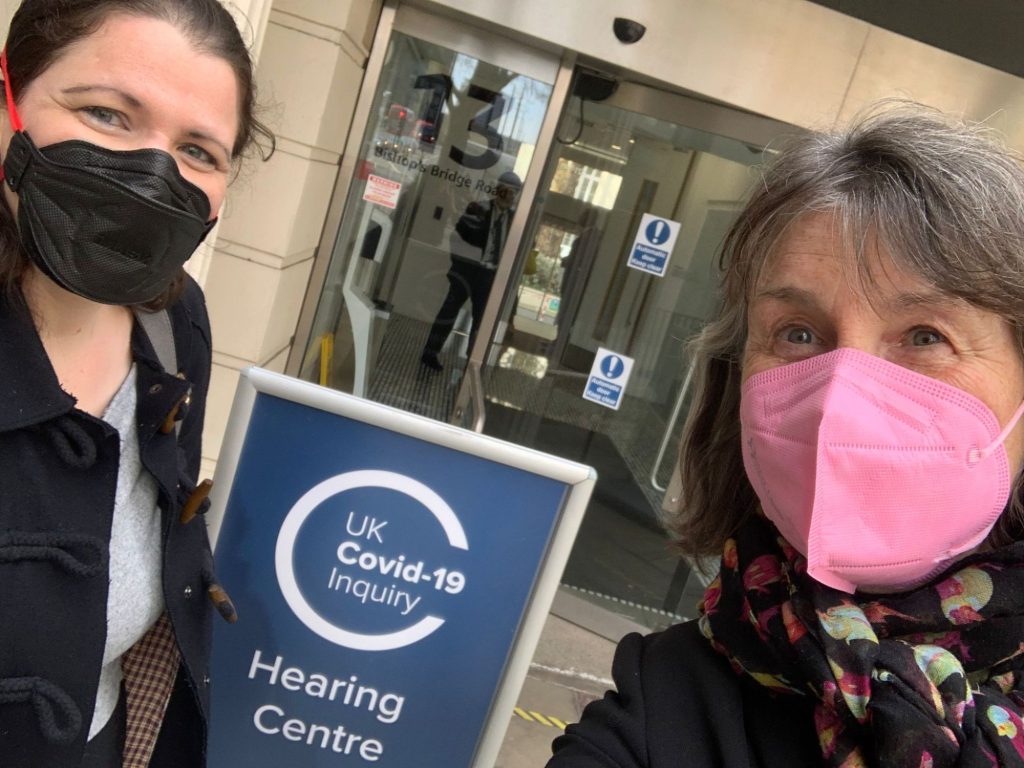
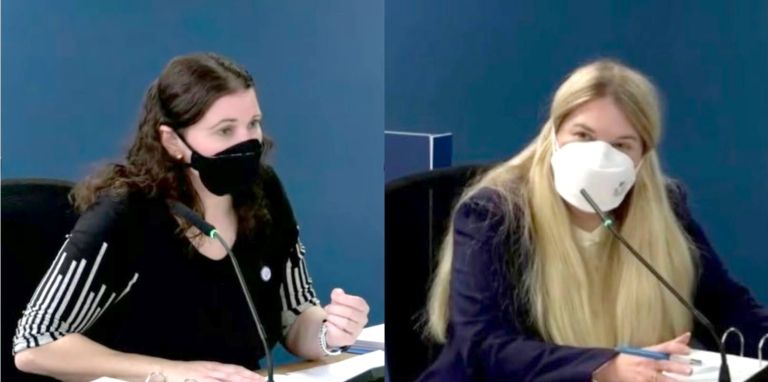
We were the only organisation at the Inquiry chosen to speak for Clinically Vulnerable people, which includes everyone with increased health risks – including those formerly identified as Clinically Extremely Vulnerable (CEV), and those who are immunocompromised. In other areas, several charities shared the workload; CVF was unique as a volunteer-led organisation, without financial support, doing the same work as much larger organisations and government departments with paid staff. It was through the hard work and support of our team members that we achieved so much – we were often told we were punching well above our weight, shoulder to shoulder with others at the Inquiry.
We worked with the Inquiry to show the distinct obstacles Clinically Vulnerable families have faced since Covid emerged, sharing members’ experiences of how government policy affected their lives – so the response is better next time. We have hosted online gatherings for members to discuss the Inquiry’s progress, and will host two more in early 2027 to go through the Module 8 and Module 10 reports. Updates are posted on our homepage.
Giving evidence
Our evidence, module by module
Our legal team was led by Adam Wagner KC of Doughty Street Chambers and changed from module to module, bringing in the knowledge each one needed. Between them, our barristers questioned 50 witnesses for CVF – from Boris Johnson and Matt Hancock to chief medical officers, NHS leaders and expert witnesses.
-
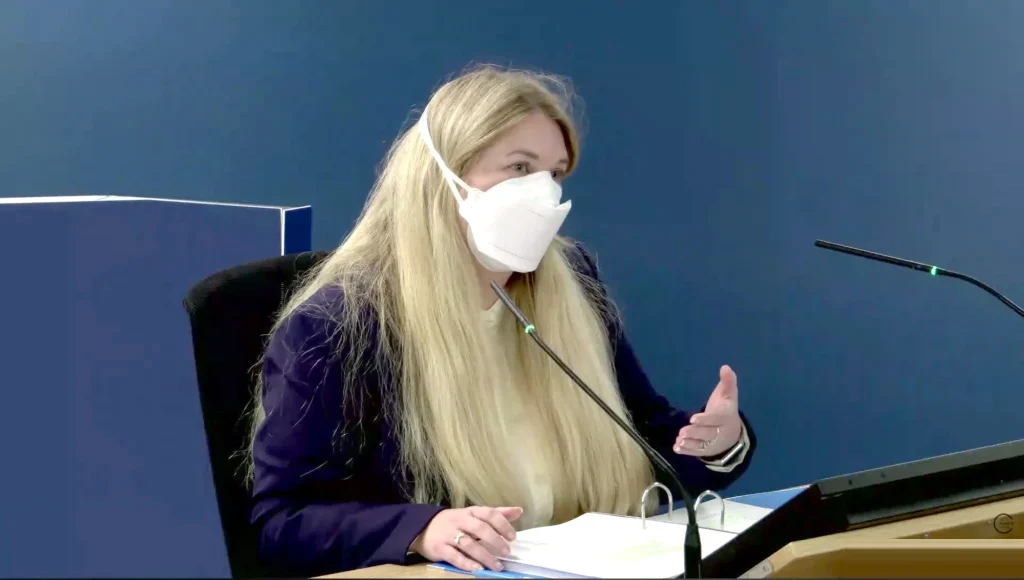
Dr Cathy Finnis gives evidence, masked, in October 2024. Image: UK Covid-19 Inquiry Module 3 Core Participant
Healthcare
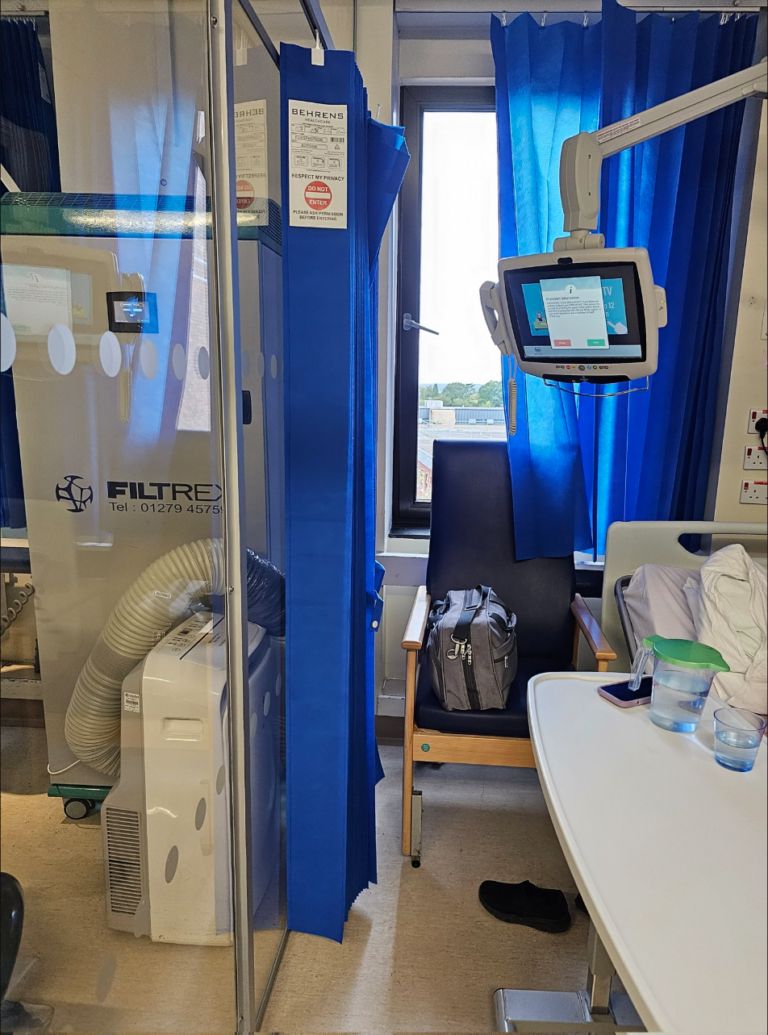
Our first module. We argued that infection control in healthcare must reflect airborne transmission, and raised how DNACPR decisions affected Clinically Vulnerable patients.
- June 2024 Two members, Lesley Jean Moore and Dr Adrian Warnock, wrote long witness statements about their care.
- 9th September 2024 On the first day of hearings, the Inquiry showed impact videos from CVF members Sarah Steven and Aaron.
- 8th October 2024 Dr Cathy Finnis gave oral evidence masked – as far as we know, the first witness ever to do so at a UK public inquiry.
- 30th October 2024 Lesley Moore was invited to give oral impact evidence, joining remotely.
- In the hearing room Adam Wagner KC used a CO₂ monitor to show Baroness Hallett the air quality, and the Inquiry installed HEPA filters.
- What changed Other Core Participants focused on healthcare workers; we were the only group to press for safety for patients and visitors, and the only one to ask infection control experts about patients wearing their own masks. The Inquiry found there was “no good reason” to stop them, and that HEPA filtration and ventilation should be prioritised. See what the Inquiry found
Who we questioned
Matt Hancock and Sir Sajid Javid (former Health Secretaries), Humza Yousaf (former First Minister of Scotland), Vaughan Gething (former First Minister of Wales), Robin Swann (former Northern Ireland Health Minister), Baroness Eluned Morgan (former Welsh Health Minister), Professor Sir Chris Whitty (Chief Medical Officer for England), Professor Sir Gregor Smith (Chief Medical Officer for Scotland), Professor Sir Frank Atherton (Chief Medical Officer for Wales), Amanda Pritchard (Chief Executive, NHS England), Professor Dame Jenny Harries (Chief Executive, UK Health Security Agency), Caroline Lamb (Chief Executive, NHS Scotland), Dr Andrew Goodall (Permanent Secretary, Welsh Government), Judith Paget (Chief Executive, NHS Wales), Aidan Dawson (Chief Executive, Public Health Agency, Northern Ireland), Laura Imrie (Clinical Lead, ARHAI Scotland), Professor Fu-Meng Khaw (Public Health Wales), Professor Philip Banfield (Chair of Council, British Medical Association), Professor Helen Snooks (expert on emergency pre-hospital care and shielding), Dr Michael Mulholland (Royal College of General Practitioners) and Dr Gee Yen Shin (expert on infection prevention and control).
Our evidence
Written Dr Cathy Finnis’s statementLesley Jean Moore’s statementDr Adrian Warnock’s statement
Oral Dr Cathy Finnis, 8th October 2024Lesley Moore, 30th October 2024
Represented by Adam Wagner KC, Daniella Waddoup and Rosa Polaschek of Doughty Street Chambers, instructed by Kim Harrison and Shane Smith of Slater and Gordon.
-
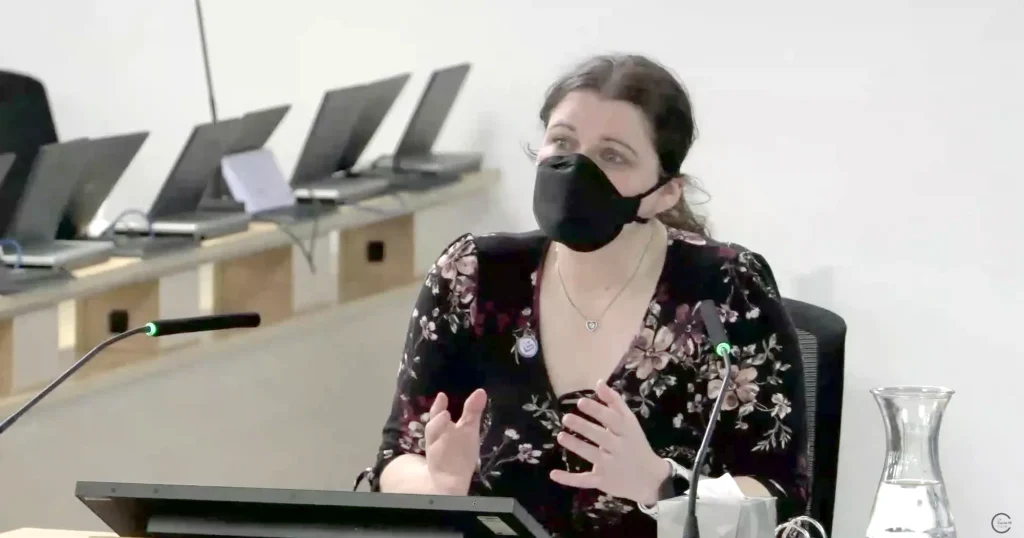
Lara Wong gives evidence, masked, in January 2025. Image: UK Covid-19 Inquiry Module 4 Core Participant
Vaccines & therapeutics
We argued that Clinically Vulnerable people were left behind on vaccines, antivirals and protective treatments such as Evusheld.
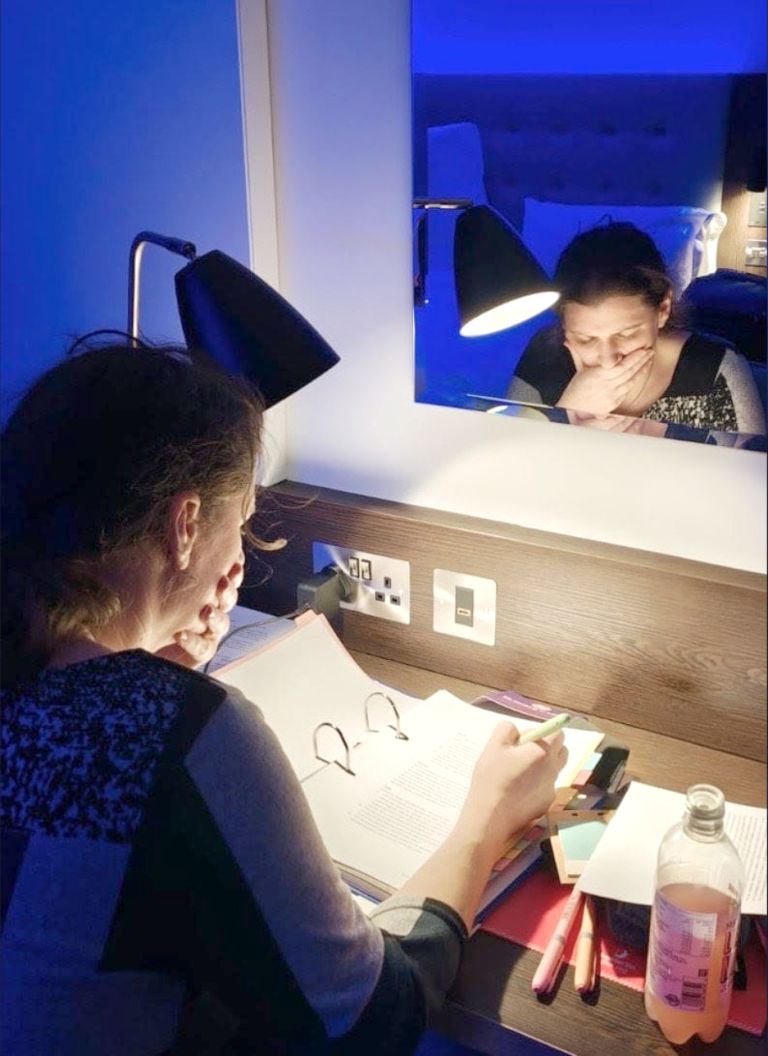
- November 2024 CVF’s written witness statement: 122 pages, over 200 paragraphs and 138 exhibits documenting members’ struggle to get vaccines, antivirals and Evusheld.
- 16th January 2025 Lara gave oral evidence under oath, masked, questioned by Lead Counsel Hugo Keith KC.
- 3rd March 2025 Our members withdrew the impact videos they recorded for Module 4, because of concerns that videos had not been checked by medical experts before being shown. Amanda and Chelsea’s videos were shown instead on the first day of the Module 5 hearings.
- What changed We shifted the Inquiry’s focus from the success of the vaccine programme to where it failed, including the vaccine programme for children; increased its focus on antivirals; and brought preventive treatments such as Evusheld into its scope, a topic it had previously left out. See what the Inquiry found
Who we questioned
Nadhim Zahawi (former Vaccines Minister), Lord Alok Sharma (former Business Secretary), Lord James Bethell (former Health Minister), Professor Sir Munir Pirmohamed (Chair, Commission on Human Medicines), Professor Sir Nicholas White (expert on Covid-19 treatments), Dr Tracey Chantler (expert on vaccine uptake) and Helen Knight (Director of Medicines Evaluation, NICE).
Represented by Adam Wagner KC, Hayley Douglas and Lameesa Iqbal of Doughty Street Chambers, instructed by Kim Harrison and Shane Smith of Slater and Gordon.
-
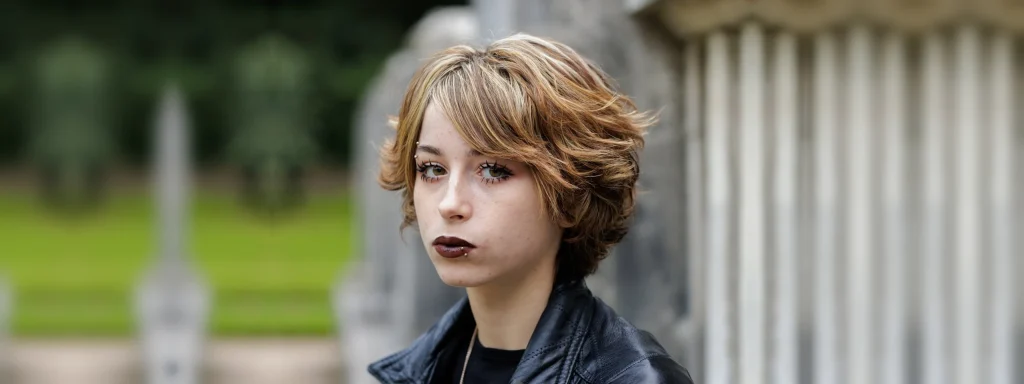
Lana Collie-James. Photograph: Sam Frost/The Guardian Module 8 Core Participant
Children & young people
We put forward the experience of children in Clinically Vulnerable households: school absence, pressure to deregister, and bullying for wearing a mask.
- 29th September 2025 On the first day of hearings, the Inquiry showed CVF member Seren Stewart’s impact video.
- 1st October 2025 Lara Wong gave a witness statement and oral evidence, and we published our Report on Children & Young People.
- 21st October 2025 Boris Johnson was called to give evidence on his decisions about children returning to school. Questioned by Adam Wagner KC for CVF, he was challenged on the lack of safety measures and the failure to recognise the risks to Clinically Vulnerable children and families.
- What changed Because of our work in this module, the Inquiry considered school safety: Professor Catherine Noakes was invited to give evidence as a result, and Professor Jim McManus’s evidence was included. Report awaited
Who we questioned
Boris Johnson (former Prime Minister), Sir Gavin Williamson (former Education Secretary), Mark Drakeford (former First Minister of Wales), Vicky Ford (former Children’s Minister), Baroness Anne Longfield (former Children’s Commissioner for England), Professor Sir Chris Whitty (Chief Medical Officer for England), Susan Acland-Hood (Permanent Secretary, Department for Education), Professor Russell Viner (President of the Royal College of Paediatrics and Child Health during the pandemic), Professor Catherine Noakes (expert on airborne transmission and ventilation), Dr Shona Arora (UK Health Security Agency), Nicola Dickie (Convention of Scottish Local Authorities), Professor Steve Turner (President, Royal College of Paediatrics and Child Health), Duncan Burton (Chief Nursing Officer for England), Dr Tamsin Newlove-Delgado (expert on children’s mental health) and Professor Catherine Davies (expert on child development).
Represented by Adam Wagner KC, Hayley Douglas and Lameesa Iqbal of Doughty Street Chambers, instructed by Kim Harrison and Shane Smith of Slater and Gordon.
-
Module 10 Core Participant
Impact on society
We asked the Inquiry to examine the long-term, unequal impact on people at higher medical risk, and to hear properly from experts on clinical vulnerability.
- 16th February 2026 On the first day of hearings, the Inquiry showed a CVF member’s impact video, “Secondary teacher at the start of the pandemic”.
- 24th February 2026 Lara Wong gave oral evidence, alongside our Impact on Society Report.
- Terms of reference The module’s scope focused heavily on mental health. We turned that focus to the harm to Clinically Vulnerable people’s mental health caused by the failure to reduce the risks to their physical health.
- What changed We led the call for an expert report on clinical vulnerability, and pushed hard for additional witnesses to consider clinical vulnerability. Report awaited
Who we questioned
Professor Azeem Majeed (Professor of Primary Care and Public Health, Imperial College London), Professor Sarah Stewart-Brown (Centre for Strategy and Evaluation Services), Professor Nick Watson (expert on the impact on disabled and Clinically Vulnerable people), Dr Sarah Hughes (Chief Executive, Mind), Charlie Taylor (HM Chief Inspector of Prisons during the pandemic), Professor James Nazroo (expert on ethnicity and health inequalities) and Daniel Shears (for the Trades Union Congress).
Our evidence
Written Lara Wong’s witness statementImpact on Society Survey
Represented by Adam Wagner KC, Hayley Douglas and Margherita Cornaglia of Doughty Street Chambers, instructed by Kim Harrison and Shane Smith of Slater and Gordon.
Outcomes
What we asked for, and what the Inquiry found
Two of our four modules have reported so far.
- Found or recommended
- Partly
- Still to win
Module 3 report · 19th March 2026
Healthcare
- Found: Infection control guidance must reflect all routes of transmission, including airborne. Guidance had been “wedded to an outdated and scientifically inaccurate understanding of how the virus spread.”
- Found: HEPA filtration and ventilation to be prioritised in healthcare buildings.
- Found: No good reason to stop patients wearing face masks.
- Found: DNACPR notices placed without consent were documented, with our members’ evidence quoted.
- Still to win: A review of DNACPR decisions made during the pandemic.
- Still to win: Clinical vulnerability recognised as a protected characteristic.
Module 4 report · 16th April 2026
Vaccines & therapeutics
- Found: Protecting immunocompromised people, including with preventive drugs such as Evusheld, must be a priority next time.
- Found: Antiviral and preventive drug development was deprioritised, the Treasury resisted funding Evusheld, and cost – not clinical need – decided it.
- Found: Safer places to be vaccinated, clearer messages on who can get antivirals, and better-linked health records so eligible patients aren’t missed.
- Partly: The children’s rollout was “too slow, too limited, and too short” – but children under 5 without health conditions have still never been offered a Covid vaccine.
“The need to provide protection to the immunocompromised, including through prophylactic drugs, must be a priority when preparing for the next pandemic.”
Baroness Hallett, Module 4 report
Modules 8 and 10: reports awaited. We will go through them with members at our online gatherings in early 2027.
The work isn’t finished
The Equality Act 2010 still doesn’t protect people on the basis of clinical vulnerability. Protections were switched on and off at ministers’ discretion throughout the pandemic, with nothing for our members to fall back on in law. Millions of people in the UK with conditions like cancer, asthma, diabetes, heart disease or weakened immune systems deserve their safety guaranteed in law, not offered as a temporary measure. That’s the argument we made throughout the Inquiry, and we will keep making it as the final reports are published.