Voter ID created a new barrier for Clinically Vulnerable people. We pushed to make polling stations safer and more accessible – and we’re still checking that the changes actually work.
What we found
Voter ID created a new barrier
Members began telling us that something was wrong. People who had voted all their lives no longer felt able to vote in person. The introduction of voter ID had created a new barrier: for Clinically Vulnerable voters and others who continued to wear a mask indoors, being asked to remove it, even briefly, made attending a polling station feel unsafe.
70%
More than 70% of Clinically Vulnerable voters said they no longer felt able to vote in person at all.
Nearly half
were asked to remove their mask indoors – some went through ID checks while masked, even though this is against the rules.
A third
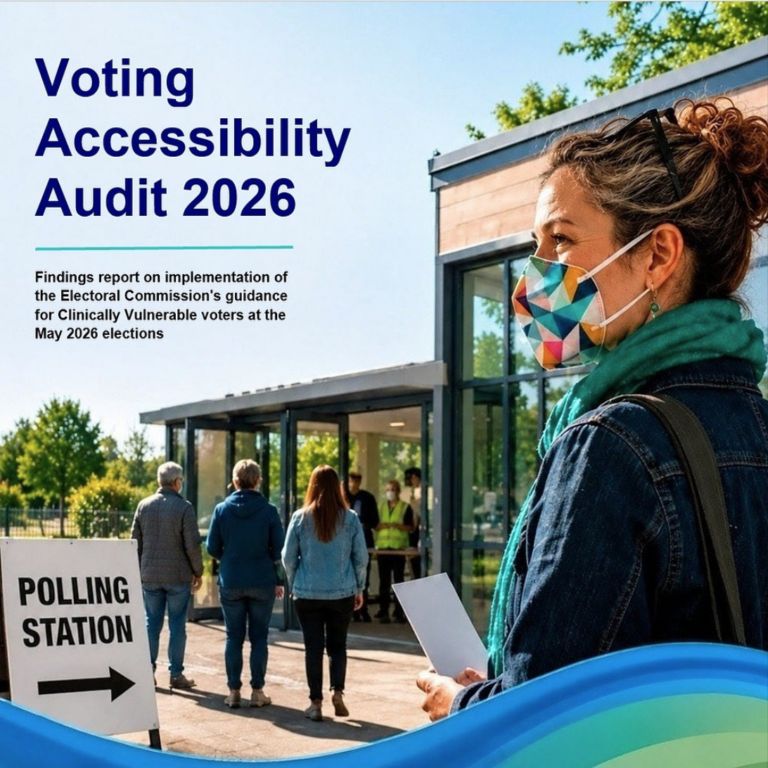
of respondents told us the new guidance enabled them to return to voting in person (Voting Accessibility Audit 2026).
Our evidence changed the guidance
Three principles for every polling station
Following engagement from CVF and others, the Electoral Commission updated its guidance ahead of the 2026 elections. For the first time, it explicitly recognised Clinically Vulnerable voters.
“See a mask, wear a mask”
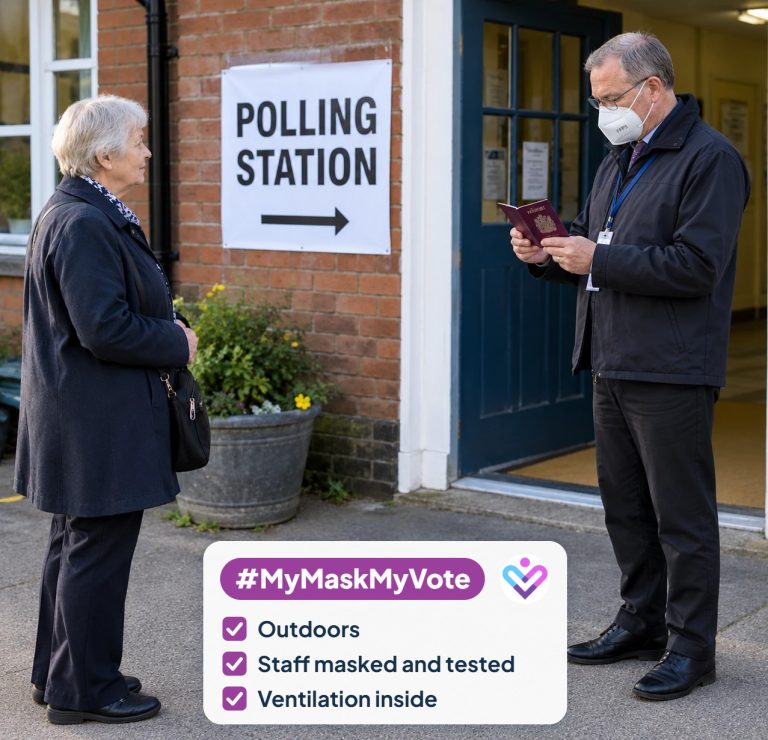
Staff should wear a mask when assisting a voter who is wearing one.
Good ventilation
Open doors and windows, or use air filters where possible.
ID checks outside
Voters who wear a mask can be offered an ID check outside the polling station.
#MyMaskMyVote
Voted recently? Check your polling station
Tick what you saw and add a CO₂ reading if you took one. You’ll see straight away how your polling station measured up. Nothing is sent to us or saved.
If you took a CO₂ monitor, the highest reading you saw inside. Outdoor air is about 420 ppm.
Before the next election
Please check again for us next time – and take a CO₂ monitor if you can. Every polling station you check helps us show where the guidance is working.
Contact your local electoral services team (the Returning Officer’s office at your council) ahead of the next election. Share the Electoral Commission’s updated guidance, including training staff on “see a mask, wear a mask”, and remind them about accessibility for Clinically Vulnerable voters.
Find your electoral services team The Electoral Commission’s updated guidance
A letter you can send them
We’ve drafted a letter from what you ticked, explaining why each point matters. Add any details you’d like to include, check it reads the way you want, then copy it into an email. Nothing you type here is sent to us or saved.
Finding their email address: enter your postcode on the Electoral Commission’s elections in your area page. It gives the contact details for your council’s electoral services team, who work for the Returning Officer.
How we got here
From a new barrier to new guidance
- 2023 Voter ID is introduced at polling stations.
- Members speak up Clinically Vulnerable voters tell us they no longer feel safe voting in person.
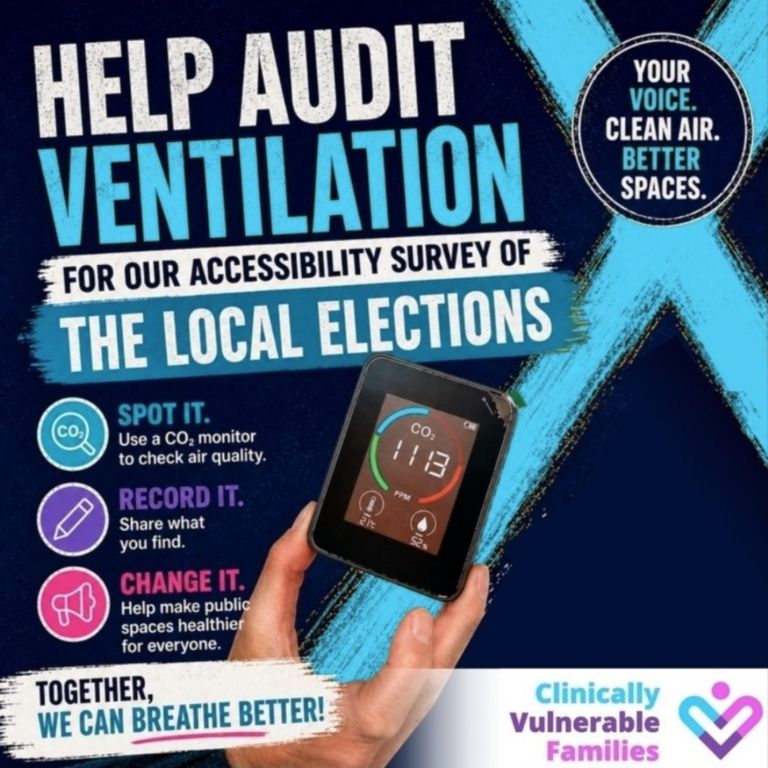
- We audit Anonymous five-minute surveys after each election: CO₂ readings, open doors and windows, air filters and masked voters’ experiences.
- 2026 Electoral Commission guidance recognises Clinically Vulnerable voters for the first time – and around a third of respondents return to voting in person.
There’s still more to do
Our audit found that implementation remains inconsistent. While some polling stations embraced the guidance, others appeared unaware of it, and many respondents only learned about the available adjustments through CVF rather than official election communications. That’s why we keep auditing every election, using simple, anonymous, five-minute surveys – CO₂ monitor readings, counts of open doors and windows, air filter presence, and masked voters’ own experiences, shared with the hashtag #MyMaskMyVote.