Anti-Bullying Week · 16th–20th November 2026
Some children wear a mask to protect their own health, or someone they love at home. This Anti-Bullying Week, help make sure they are included, not singled out.
Why some pupils wear a mask
For these children, a mask is how they take part
Some children are Clinically Vulnerable or immunocompromised: an infection that is mild for most people can make them seriously ill. Many more live with a parent, brother, sister or grandparent who is. A well-fitting FFP2 or FFP3 mask is often what lets them come to school, and stay there.
A mask helps every child who wears one stay in school, too. A well-fitting mask protects them from the coughs, colds and other bugs going round, so they miss fewer days through illness. Many of our families told us their children achieved 100% attendance once they started wearing one.
A mask is not a statement or a sign of worry. It is a sensible step to protect someone’s health, and it deserves the same respect as any other support a child needs.
90%
of our families wanted their child to have the option to wear a mask in school. Only about a third were able to.
56%
of children who wore a mask had negative comments from other pupils, and 47% from staff.
27%
were physically bullied, including people deliberately coughing or spitting at them.
From our Report on Children and Young People (2025), a survey of 350 Clinically Vulnerable households.
What families told us
“No one would sit next to her”
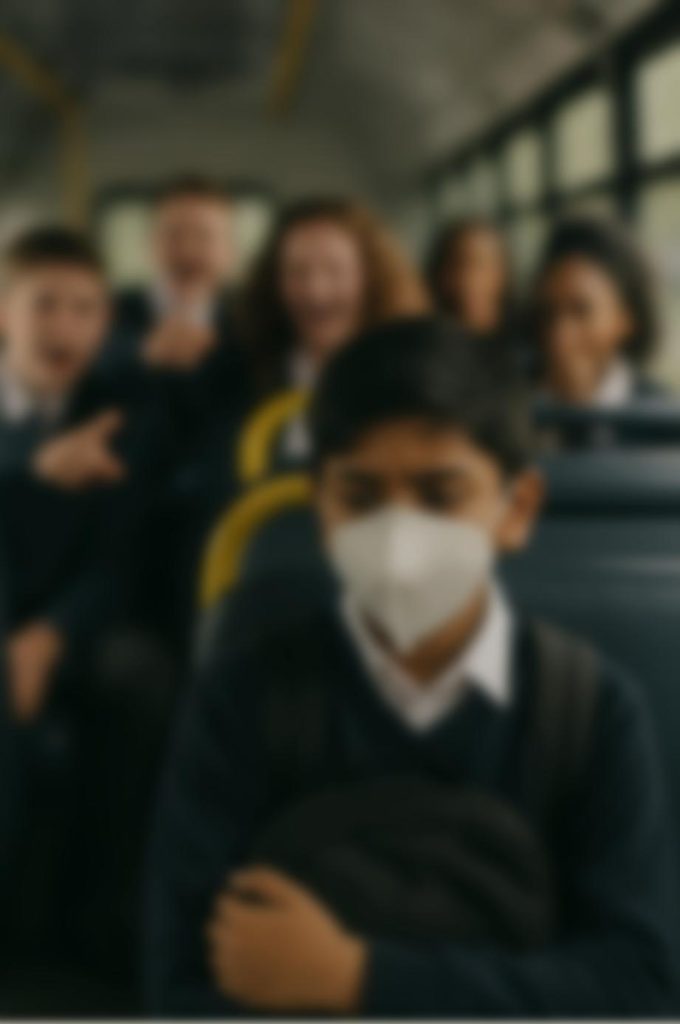
“Our son was widely bullied by children at school for wearing a mask when others were told it was no longer mandatory… Some even tried to remove it from him physically.”
Gemma, parent
“On the coach to competitions, no one would sit next to her and a group of girls would spend the journey repeating ‘why are you wearing a nappy on your face’.”
Quinn, parent
This year’s theme: Break the Silence
Many children never told anyone
Children who are picked on for wearing a mask often stay quiet. Some were told by adults that the mask was the problem. Breaking the silence means believing them, calling it what it is – bullying – and making sure adults are never part of it.
Odd Socks Day on Monday 16th November celebrates what makes each of us unique. That includes the child in your class who wears a mask.
For schools
Six things schools can do
Name it in your policy
Say clearly that comments about a mask, pulling it off, or coughing at someone on purpose is bullying.
Adults set the tone
Staff should never ask a pupil to justify or remove their mask – and should step in when others do.
Include them in everything
Trips, music, sport, assemblies and exams – and a safe, well-aired place to eat and drink.
Plan it with the family
Agree what helps, and record it in the pupil’s Individual Healthcare Plan if they have one.
Not a safeguarding concern
Wearing a mask to protect someone’s health is never, on its own, a reason for a referral.
Cleaner air helps everyone
Good ventilation, CO2 monitors and air cleaners protect the whole class. Our clean air work
Guidance for schools
What schools can do now
Nothing in current guidance stops a pupil wearing a mask, and nothing stops a school supporting them. UKHSA advises people whose immune system puts them at higher risk to consider wearing a well-fitting face covering in crowded places, and schools already have duties under the Equality Act 2010 and to support pupils with medical conditions.
The Department for Education is revising its guidance on supporting pupils with medical conditions. We’re working with officials so that it supports Clinically Vulnerable children, including those who choose to wear a mask, and we’ll share news when the final version is published.
For teachers
A few words for your class
You are welcome to use or adapt this:
“Some people wear a mask to protect their own health, or someone at home who could get very ill. It’s their choice, and it’s a kind one. In our class we don’t make comments about it, ask anyone to take it off, or leave anyone out. If you see someone being picked on for wearing a mask, tell an adult.”
For young people
If you’re being picked on for wearing a mask
- You haven’t done anything wrong. Protecting your health, or someone you love, is a good thing to do.
- Tell an adult you trust – at home or at school. If that feels hard, ask a parent or carer to speak to the school for you.
- Write down what happened, when, and who was there. It helps adults to act.
- You can talk to Childline for free, any time, on 0800 1111.
For parents and carers
Raising it with your child’s school
Fill in a few details and we’ll write the letter for you. Nothing you type is sent to us or saved – it stays on your device. We only count how many times the letter tool is used.
Tell us what’s happening
Has your child been picked on for wearing a mask – or has their school got it right? We want to hear both. Your experiences help us make the case for every child.